+86-13901441113

Leave Your Message
-
CONTACT NUMBER
-
 CONTACT NUMBER
 -
 CONTACT NUMBER
Choosing the right outdoor playset is more complicated than picking the brightest color. Global buyers must consider climate, child age, available space, installation skills, and local safety expectations. A wooden climbing frame may suit a dry garden, but repeated rain can expose weak drainage and poor sealing. In coastal areas, metal connectors need stronger corrosion resistance. These details often matter more than appearance.
This guide explores the 2026 Best Unique Outdoor Playsets for Global Buyers. It focuses on designs that offer more than standard swings and slides. Some models combine climbing walls, shaded reading corners, sensory panels, rope bridges, and imaginative playhouses. The best Unique Outdoor Playsets should encourage movement while remaining stable, serviceable, and suitable for supervised family use. Clear assembly instructions also matter. A beautiful structure is not useful if buyers cannot install it correctly.
Real-world experience suggests that every choice includes compromises. Compact playsets save space, yet they may reduce climbing variety. Large timber structures create memorable play areas, but they demand regular inspection. No playset is perfect. Buyers should check load limits, surface protection, anchoring methods, replacement parts, and warranty terms before ordering internationally. Product descriptions can sound impressive, but practical evidence is more valuable. This overview aims to provide careful, balanced guidance for families, retailers, schools, and hospitality businesses seeking durable play equipment across different markets. Expect useful comparisons, but also a few uncomfortable questions about maintenance, shipping, and long-term value.
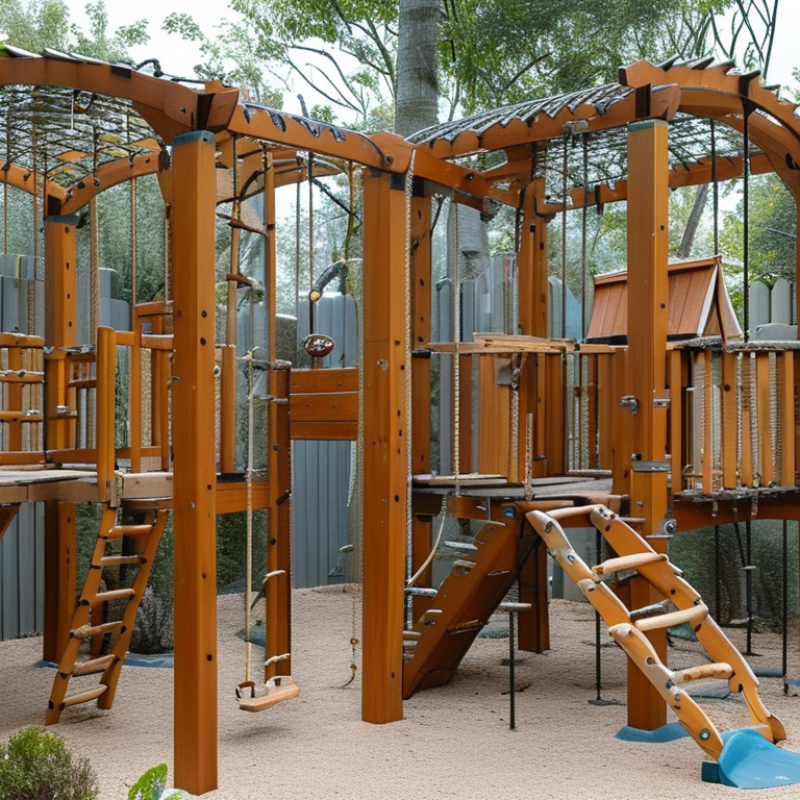
In 2026, a unique outdoor playset does more than add bright colors to a yard. It creates varied play experiences within one compact footprint. Look for climbing routes, balance elements, quiet corners, and adjustable challenges. A child may cross a rope bridge, then retreat beneath a shaded platform. That change matters. Inclusive design also deserves attention. Ground-level activities, wide access points, and varied grip heights can welcome children with different abilities. Uniqueness should be useful, not decorative.
Tips: Ask how the structure performs after rain, heat, frost, and strong sunlight. Check drainage points, rounded edges, stable anchoring, and clear fall zones. Materials should resist splintering and corrosion, but every finish still needs inspection. Request test reports and installation guidance that match your region. Global buyers should verify local safety requirements, delivery conditions, spare-part access, and installer qualifications. A clever design becomes frustrating when one small connector cannot be replaced.
Look for modular components that can be reconfigured as children grow. Repairable parts often provide more value than sealed, disposable assemblies. Sensory additions, such as textured panels, musical surfaces, or planting beds, can make play feel personal. Yet too many features may create clutter. Keep it simple. I would test the playset at a child’s pace, not only from a catalog image. Watch for slippery steps, awkward hand positions, and heat under metal surfaces. Some “unique” ideas need another season of testing.
| Unique Playset Configuration | Recommended Age | Typical Footprint | Maximum Platform Height | Capacity | Distinctive 2026 Feature | Material and Weather Detail | Global Buyer Consideration |
|---|---|---|---|---|---|---|---|
| Compact Modular Climber | 2–6 years | Approx. 2.4 × 2.1 m | 1.2 m | 4–6 children | Reconfigurable climbing, sliding and sensory modules | Pressure-treated or naturally durable timber with UV-stabilized plastic panels | Suitable for smaller gardens; confirm local anchoring and fall-surface requirements |
| Inclusive Ramp-Access Playset | 2–8 years | Approx. 4.2 × 3.5 m | 1.0–1.5 m | 6–10 children | Low-gradient access ramp, transfer platform and inclusive panel activities | Powder-coated metal or treated timber; non-slip ramp surface recommended | Check wheelchair turning space, ramp gradient and accessibility rules in the destination market |
| Nature-Themed Adventure Tower | 3–10 years | Approx. 4.8 × 4.0 m | 1.8–2.1 m | 8–12 children | Treehouse-style tower with climbing wall, rope bridge and lookout deck | Durable timber, galvanized fasteners and rot-resistant structural components | Aesthetic fit with parks and residential landscapes; requires larger fall zones |
| Sensory Discovery Playset | 2–8 years | Approx. 3.6 × 3.0 m | 1.2–1.5 m | 5–8 children | Musical panels, textured surfaces, color recognition and quiet-play zones | Weather-resistant panels with sealed edges and corrosion-resistant hardware | Useful for mixed-age and sensory-focused environments; inspect sound elements regularly |
| Convertible Active-Lifestyle Set | 3–12 years | Approx. 5.0 × 3.8 m | 1.5–2.1 m | 8–14 children | Interchangeable swings, climbing grips, gym rings and balance elements | Hot-dip galvanized steel or treated timber with replaceable wear parts | Prioritize load ratings, spare-part availability and secure component locking |
| Water-Play and Sand-Play Station | 2–8 years | Approx. 3.0 × 2.6 m | Below 1.2 m | 4–8 children | Gravity-fed water channels, sand tables and removable activity trays | High-density plastic, stainless steel fittings and drainage-friendly surfaces | Confirm drainage, hygiene, freeze protection and water-management regulations |
| Low-Carbon Recycled-Material Set | 3–10 years | Approx. 4.0 × 3.5 m | 1.5–1.8 m | 6–10 children | Recycled plastic lumber, modular panels and design-for-disassembly construction | Recycled polymer components with UV protection and recyclable metal fixings | Request verified recycled-content, durability and end-of-life documentation |
| Climate-Resilient All-Season Set | 3–12 years | Approx. 5.2 × 4.2 m | 1.5–2.1 m | 8–14 children | Heat-reducing shade, replaceable covers, drainage channels and anti-corrosion fittings | UV-stabilized materials, sealed timber ends and stainless or galvanized hardware | Evaluate wind, snow, heat, humidity and coastal-salt exposure for the installation site |