+86-13901441113


Choosing the right Outdoor Playground Swing for your kids is vital for their enjoyment and safety. According to outdoor play expert Dr. Emily Harris, "The right swing can ignite children's imagination and promote physical activity." With so many options available, this choice can be overwhelming.
Consider the age and size of your children when selecting an Outdoor Playground Swing. Younger children need swings with safety features. Yet, some might outgrow them quickly. Finding a balance can be challenging. You'll want to ensure the swing is fun, yet secure enough for your little ones.
Materials also matter. Wooden swings can blend into natural surroundings, but they may require more maintenance. Metal swings might be durable but could heat up in the sun. Reflecting on these aspects can help you make a more informed decision. An Outdoor Playground Swing should be both a source of joy and a safe play environment for your children.
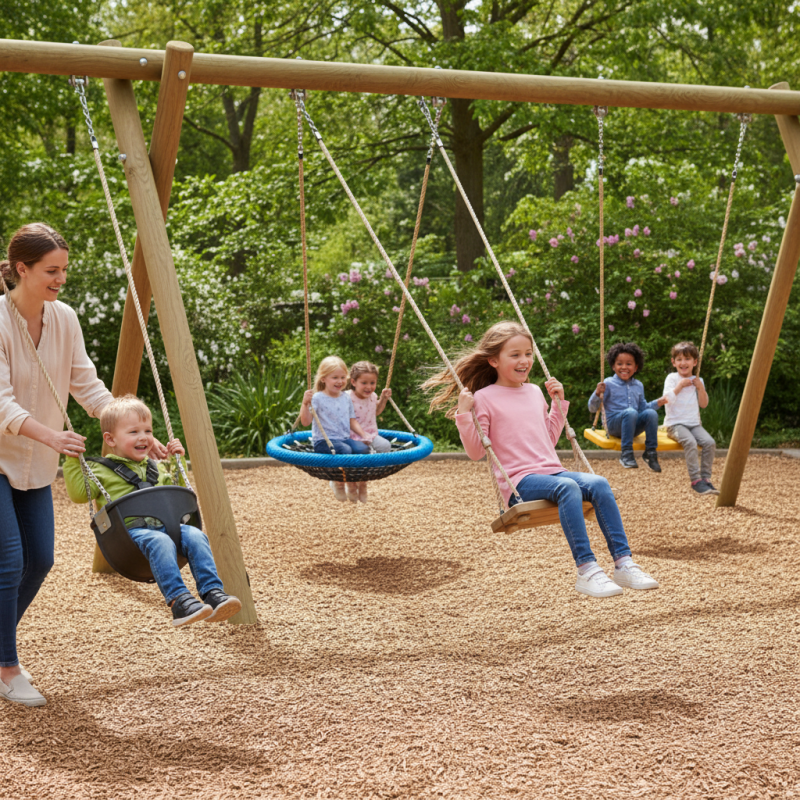
When choosing outdoor playground swings, the material plays a vital role. Plastic swings are light and colorful. They are popular among younger kids. However, they may wear out quickly, especially under harsh sunlight. Metal swings offer durability and stability. They can withstand various weather conditions but may get hot in summer. Consider the safety aspect; sharp edges can be dangerous.
Wooden swings bring a natural look to playgrounds. They blend well with outdoor settings. However, they require regular maintenance. Over time, wood can splinter or decay if not treated properly. Investing in a wood swing means committing to care and upkeep. Some parents prefer the aesthetic appeal of wood, despite the effort.
When evaluating materials, prioritize safety, durability, and maintenance. Reflect on how each material fits your lifestyle and environment. Listen to your kids’ preferences too. They might love the look of something that isn't the most practical. Balancing aesthetics with safety can lead to tough decisions. Keep their enjoyment in mind while making these choices.
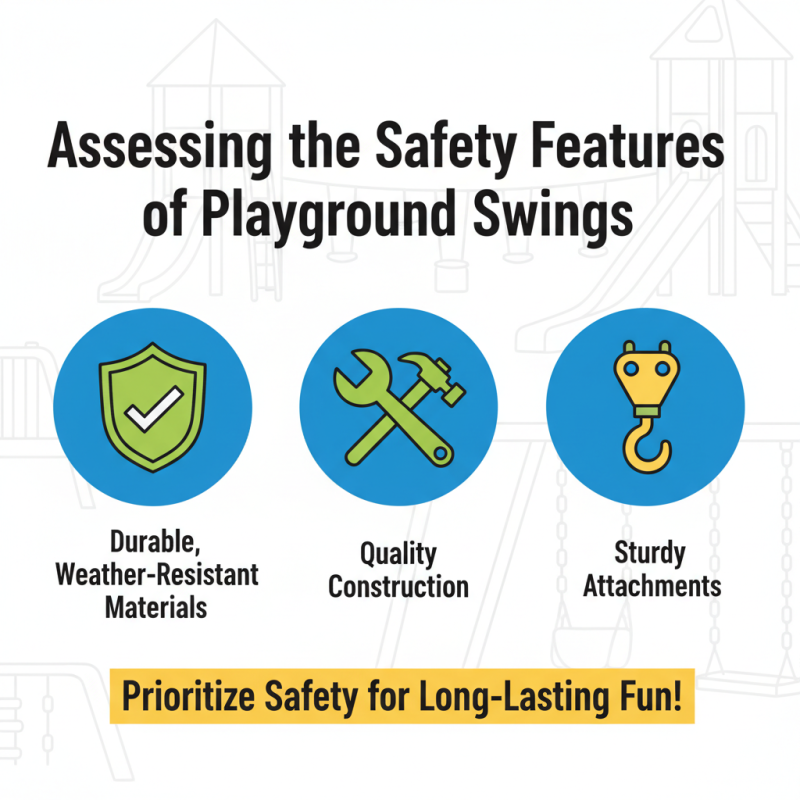
When selecting an outdoor playground swing, safety features are crucial. Parents should prioritize materials and construction quality. Swings made from durable, weather-resistant materials ensure longevity and reduce maintenance. Look for swings with sturdy attachments to prevent accidents.
Another important safety aspect is the design. A swing should have secure seats with safety harnesses for younger children. Check the height and distance from the ground to minimize falls. Additionally, swings with soft edges can help prevent injuries during play.
Consider the space around the swing as well. A clear zone of at least six feet is ideal. This area helps avoid collisions with other equipment. Parents should also supervise playtime closely. It’s easy to miss an unsafe act. Regularly check the swing for wear and tear. Address any issues promptly. Safety is not just about features; it’s about a proactive approach to play.
When selecting an outdoor playground swing for your children, size and weight capacity are crucial factors. The American Society for Testing and Materials (ASTM) recommends swings should hold at least 200 pounds to accommodate multiple kids or growing children. However, weight capacity can vary widely across swings. It’s essential to check specifications before making a purchase.
Children's sizes differ significantly. A swing too big may pose safety risks, while a small one might limit playtime. For toddlers, a low seat height of around 10 inches is ideal, while older kids might need swings with a height of 18 inches or more. Remember, swings should not only be age-appropriate but also spacious enough for comfort and movement.
Tip: Always consider the number of kids that will use the swing. Overloading can cause wear and tear or even accidents. Inspect swings regularly for any signs of damage, as swings do degrade over time. Not all swings are created equal; some might not meet safety standards. Ensuring the right size and weight capacity is essential for a safe play experience.
When selecting a swing for children, consider their age. Different age groups need different designs. For toddlers, look for swings with safety harnesses. These provide extra security as kids explore swinging. Material matters too. Opt for soft, durable options. It can reduce the risk of minor injuries.
For older children, traditional swings can be great. These allow them to push higher and feel the thrill. Look for swings that are adjustable. Adjustable swings grow with your child. Think of how often kids outgrow toys. Focus on designs that accommodate their development stages.
Sometimes, choices can overwhelm parents. It's easy to overlook safety for style. Reflect on your child's personality. Do they prefer a cozy, sheltered swing or an open design that invites adventure? Finding the right swing is not just about looks. It's about ensuring fun while keeping safety in mind.
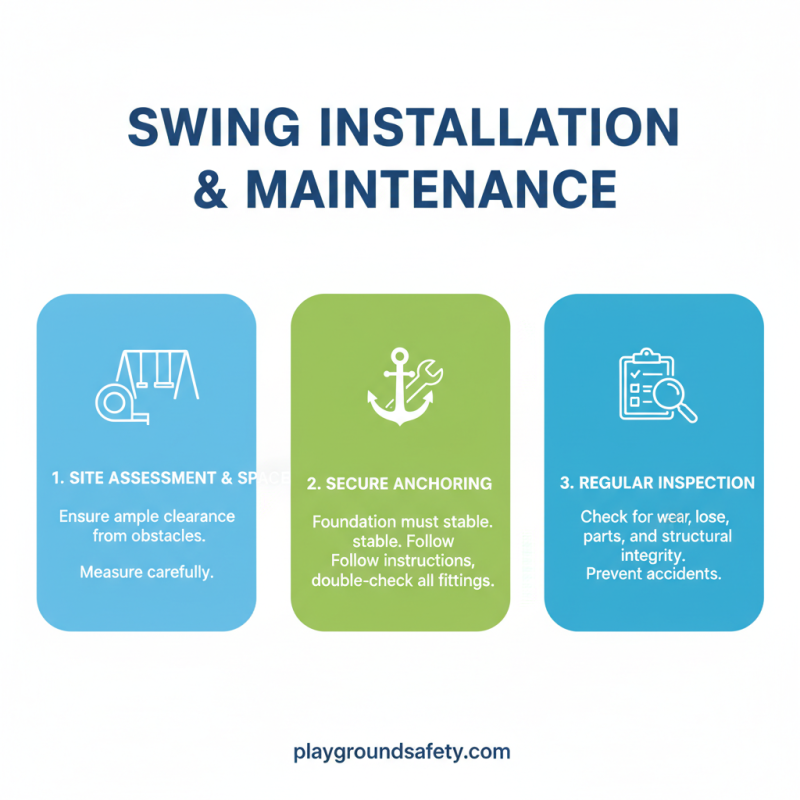
When selecting an outdoor playground swing, installation and maintenance are key considerations. Begin with assessing the area where the swing will be placed. Ensure there is enough space around the swing to prevent accidents. Swing sets should be well anchored to the ground. Some swings come with clear installation instructions, but errors can occur. Double-check measurements to avoid issues later.
Maintenance is equally important. Regularly inspect the swing for wear and tear. Look for frayed ropes or rusted chains. These can pose risks to safety. Cleaning the swing periodically is essential. Dirt and debris can build up and affect performance. However, don't forget that some swings require more upkeep than others. Finding a balance between quality and maintenance needs can be challenging.
Consider weather factors too. Exposure to sunlight and rain can degrade materials over time. Some swings may not withstand harsh conditions. Be realistic about how much time and effort you can invest in upkeep. This reflection may impact your final choice greatly. A well-maintained swing can provide years of enjoyment, but neglect can lead to safety hazards.