Leave Your Message

How to Choose an Outdoor Play Slide for Your Business?

Choosing an Outdoor Play Slide for a business involves more than comparing bright colors and retail prices. It requires careful judgment about children, staff, space, weather, and long-term operating costs.

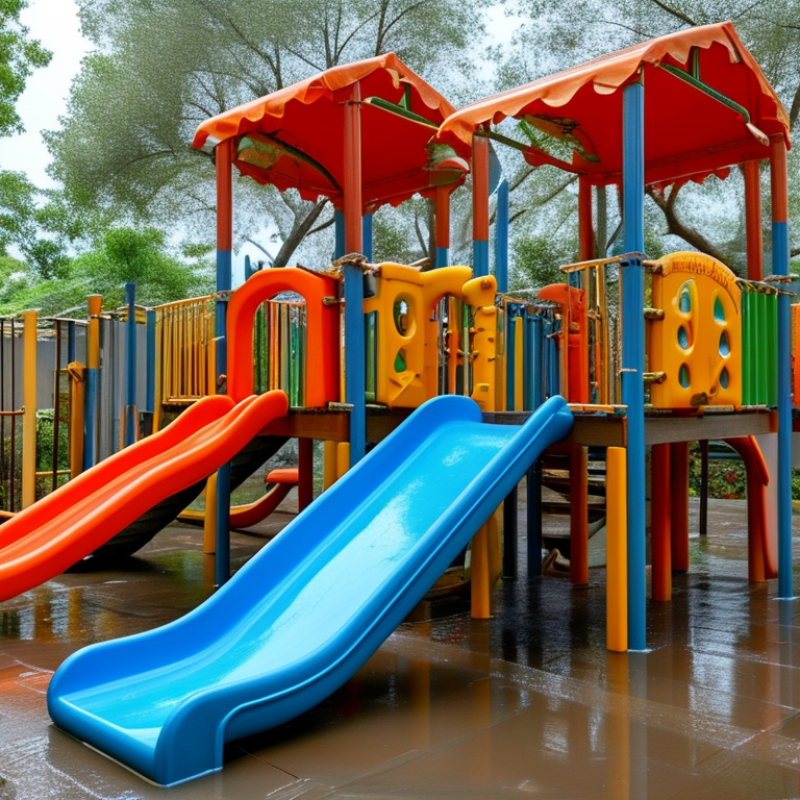
Dr. Joe L. Frost, a respected playground scholar, wrote, “Play is the business of childhood.” That idea matters when selecting equipment for a café, hotel, school, family entertainment center, or public venue. A slide should invite active play while offering suitable challenge for its intended age group. Check its height, platform access, handrails, surface temperature, fall zone, and visibility from staff areas. Small details matter. A shaded platform can feel safer on a hot afternoon. Smooth drainage can prevent slippery steps after rain. Clear sightlines help employees notice hesitation, crowding, or unsafe behavior.

Business owners should also examine materials, loading capacity, installation quality, cleaning requirements, replacement parts, and warranty support. Local safety requirements may differ, so qualified inspectors and manufacturers should confirm compliance before opening. Experience teaches an uncomfortable lesson: the cheapest option can look sensible on paper, yet become expensive after repeated repairs. Appearance alone proves very little.

There is no perfect slide. A design that works beautifully indoors may fade, heat, or weather differently outdoors. Review supplier documentation, request references, and observe similar equipment in real use. Speak with operators who manage daily queues and maintenance. Their practical feedback may reveal problems a brochure hides. A well-chosen Outdoor Play Slide should create excitement, support supervision, and remain dependable through busy seasons. That balance protects the business and gives children a memorable reason to return.
How to Choose an Outdoor Play Slide for Your Business?

Define Your Business Needs and Available Play Space

Before choosing an outdoor play slide, define the business purpose. A daycare, hotel, and public park need different equipment. Estimate daily users, age ranges, supervision levels, and peak hours. Record these numbers. They shape the slide height, width, access route, and expected wear. A busy venue may need reinforced materials and easier cleaning. A quieter site may value imaginative layout over maximum capacity.

Measure the play space carefully, including trees, fences, drainage, and emergency access. Do not measure only the empty center. Leave clear fall zones around the slide exit and climbing platform. Check ground slope, shade changes, and afternoon heat before finalizing placement. A layout that looks safe at 9 a.m. may feel harsh at 3 p.m. Ask a qualified installer or playground safety professional to review the plan. They can confirm impact-absorbing surfaces, anchoring, visibility, and applicable local requirements.

Budget for surfacing, delivery, installation, inspections, and future repairs. The slide price is only one line. Choose materials suited to rain, sunlight, salt air, or freezing temperatures. Keep sightlines open for staff. A beautiful design can fail operationally if adults cannot monitor every approach. I would also test the route with a stroller, cleaning cart, and mobility aid. Your first layout may be wrong. That is useful information, not wasted effort. Revise it before ordering equipment, when changes are still manageable.
Compare Slide Types, Materials, and Age-Appropriate Designs

How to Choose an Outdoor Play Slide for Your Business?

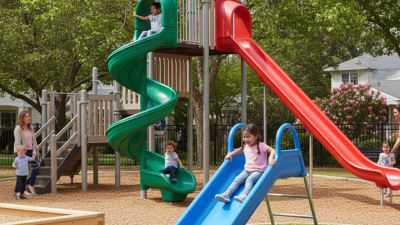
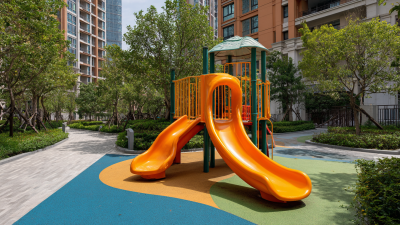
Choosing a slide starts with the children you expect to serve. Straight slides suit younger users because they are easy to understand and supervise. Wave slides add excitement without requiring advanced climbing skills. Spiral and tube slides offer more challenge for older children, but they need careful visibility planning. Separate toddler and older-child zones whenever possible. A slide should match the platform height, entry steps, handrails, and exit area.

Material affects comfort, durability, and maintenance. Rotational-molded polyethylene resists rust and usually feels cooler than metal. Stainless steel provides a fast, smooth ride, but it can become dangerously hot under direct sunlight. Fiberglass allows flexible shapes, though damaged surfaces need prompt inspection. Check UV resistance, drainage, fasteners, and surface wear before opening each day. I once overlooked afternoon glare during a site review. That mistake changed how I assess shade and slide direction.

Tips: Walk the entire route like a child. Check sightlines from the supervision point. Choose textured steps and secure barriers. Avoid openings that could trap clothing or limbs. Confirm the design meets current local playground safety requirements, including impact-absorbing surfacing. Age labels help, but they are not enough. Observe real traffic during busy hours, then adjust access or supervision. Small details matter.

Evaluate Safety Standards, Accessibility, and Risk Prevention

How to Choose an Outdoor Play Slide for Your Business?

Evaluate Safety Standards, Accessibility, and Risk Prevention

Choosing an outdoor play slide requires more than checking its height or color. During site assessments, I examine guardrails, platform barriers, slide edges, and the strength of every connection. Materials should resist weather, repeated use, and rough contact. Ask for current test reports and installation guidance that match your region’s safety standards. Do not rely on attractive photographs. Children notice weak design quickly.

Accessibility should be planned from the entrance to the exit. A firm, level route can help children using mobility devices reach the play area. Consider a transfer platform, wide circulation space, handrails, and clear sightlines for caregivers. The slide itself may not suit every child, and that is worth admitting. A nearby low-height activity can provide a fairer choice.

Risk prevention depends on layout and daily habits. Position the slide away from fences, hard corners, and conflicting play paths. Use suitable impact-absorbing surfacing around landing and climbing zones. Check bolts, cracks, sharp edges, drainage, and surface temperature on a regular schedule. Keep inspection records, even when everything appears normal. Staff should understand queue control, age guidance, and emergency procedures. No design removes every risk. I still question whether a busy site has enough supervision during peak hours. That practical doubt can reveal problems before an injury does.

Assess Installation, Maintenance, Durability, and Weather Resistance

How to Choose an Outdoor Play Slide for Your Business?

A commercial slide should fit the site before it fits the budget. Measure the fall zone, access path, drainage, and overhead clearance. Installation on compacted soil may require deeper footings than installation on concrete. Ask a qualified installer to review the ground conditions and local playground safety requirements. Small errors here can create expensive repairs later.

Maintenance needs to be simple and visible. Choose smooth surfaces without hidden gaps where dirt and moisture can collect. Inspect bolts, handrails, steps, and edge guards regularly. Look for cracks, sharp points, loose hardware, and fading. I once underestimated how quickly sand can wear moving parts. That mistake changed our inspection schedule. Keep written inspection records, even when everything appears normal.

Tips: Select UV-resistant materials, corrosion-resistant fasteners, and strong drainage around the slide. Test surface temperatures during hot afternoons. Dark plastic can become dangerously hot in direct sunlight. In coastal areas, rinse salt deposits more often. Check seals after heavy rain and inspect the structure after strong winds. Weather resistance is not permanent. It depends on material quality, installation accuracy, shade, cleaning, and timely repairs. A durable slide still needs attention. A neglected one can age quickly.

Calculate Costs, Supplier Support, and Long-Term Business Value

How to Choose an Outdoor Play Slide for Your Business?

A slide is not only an attraction. It is a revenue asset with recurring costs. The U.S. Consumer Product Safety Commission reports more than 200,000 playground injuries annually. Falls remain the leading injury mechanism. Therefore, budget for compliant surfacing, stable foundations, inspections, and staff training. A cheaper slide may become expensive after freight, assembly, repairs, downtime, and replacement parts are added. Calculate the full landed cost before comparing quotations.

Ask suppliers for load ratings, material specifications, installation drawings, maintenance schedules, and inspection records. Confirm whether replacement panels, fasteners, and handrails remain available for several years. Supplier support matters when a busy site needs a quick repair. The International Play Equipment Manufacturers Association promotes third-party certification against applicable safety standards, while ASTM F1487 provides widely used requirements for public playground equipment. Documentation is useful, but it does not replace an independent site inspection.

Estimate business value using expected daily users, average spending, operating days, and maintenance costs. A simple five-year model can expose weak assumptions. For example, 80 users per day, 300 days annually, and a modest conversion rate may justify higher upfront spending. However, weather, seasonality, and local demand can reduce that projection. My first forecast would be intentionally conservative. Choose durable components, accessible support, and a design that can be inspected quickly. The best slide is not always the most dramatic one. It is the one that stays open, safe, and financially sensible.