What Are the Top Play Sets for Global Buyers?
Choosing the right Play Sets is more complex than comparing bright colors and low prices. Global buyers must consider safety, durability, installation, and long-term value. A charming wooden tower may look ideal online, yet its timber treatment, hardware, and drainage design deserve closer inspection. The best options match children’s ages, available space, local weather, and expected daily use. Small details matter. Rounded edges, secure handrails, stable platforms, and impact-absorbing surfaces can reduce common playground risks. Buyers should also check product testing and compliance with recognized standards, such as ASTM or EN 71, where applicable. Requirements vary by market, so independent verification remains important.
This overview explores the top Play Sets for international purchasing decisions, including modular systems, wooden playhouses, metal structures, and compact backyard models. Each category offers practical advantages, but none is perfect for every location. Modular equipment can simplify replacement, while solid wood may require regular sealing in humid climates. Metal frames often provide strength, although heat exposure and corrosion need attention. I have found that product photographs rarely reveal assembly difficulty, packaging damage, or the quality of supplier communication. That uncertainty should not be ignored. Reliable sellers provide clear dimensions, material specifications, assembly instructions, warranty terms, and accessible support. Buyers should request current test reports and confirm spare-part availability before placing large orders. Price still matters, but a cheaper set may create higher maintenance costs later. This guide aims to support informed comparison, while acknowledging that local inspection and professional installation may be necessary. Experiences can differ. Careful questions usually prevent expensive surprises.
What Defines a High-Quality Play Set for Global Buyers?
What Defines a High-Quality Play Set for Global Buyers?
A high-quality play set begins with safety, not decoration. Strong materials should resist weather, repeated use, and rough handling. Rounded edges, secure fasteners, and stable platforms reduce common injury risks. Buyers should request test reports, material details, and installation instructions before ordering. Standards differ across markets, so local compliance must be checked carefully. A beautiful design means little if inspection documents are missing.
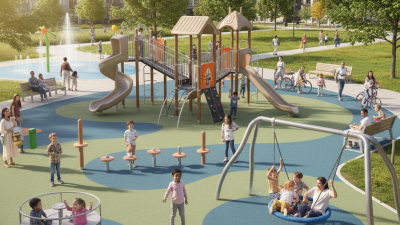
Practical usability matters just as much. Children need varied movement, including climbing, sliding, balancing, and imaginative play. Caregivers need clear sightlines and comfortable access around the equipment. Modular layouts can suit schools, resorts, housing communities, and smaller outdoor spaces. Durable coatings also help maintain color under strong sunlight. I have seen attractive products fail because drainage was ignored. That detail is easy to miss.
Tips: Check load limits, surface requirements, spare-part availability, packaging quality, and maintenance schedules. Ask for installation drawings with exact measurements. Compare warranty terms, but do not treat a long warranty as proof of quality. No checklist is perfect. Buyers should inspect samples when possible and record concerns before placing a large order. Reliable suppliers answer specific questions clearly and provide consistent technical evidence. That builds confidence across different climates, budgets, and purchasing systems.
What Defines a High-Quality Play Set for Global Buyers?
Global buyers typically assess play sets through safety compliance, durability, age suitability, weather resistance, installation clarity, and inclusive usability. The benchmark below uses a 100-point procurement score to show the relative importance of each quality dimension.
The benchmark reflects common international procurement priorities, including compliance with recognized playground safety frameworks such as ASTM F1487 and EN 1176, adequate fall protection, corrosion-resistant materials, clear assembly instructions, and age-appropriate design.
Which Types of Play Sets Suit Different Age Groups and Spaces?
Play sets should match children’s abilities, not only a garden’s appearance. For toddlers, choose low platforms, short slides, wide steps, and enclosed swings. Handrails should feel firm under small hands. A soft, impact-absorbing surface matters beneath every climbing area. Keep the layout simple. Too many features can overwhelm younger children.
Children aged five to eight usually need more challenge. Modular sets with climbing nets, ladders, longer slides, and imaginative play panels work well. Leave clear space around moving swings and slide exits. For older children, taller climbing walls, rope elements, and strength-based activities can provide better engagement. These features require careful supervision and age-appropriate fall protection. Teenagers may prefer larger structures, but many residential spaces cannot safely support them.
Apartment balconies and small yards need compact, vertical designs with limited swing movement. Indoor playrooms suit soft modules, tunnels, and low ramps. In larger outdoor spaces, separate active zones from quiet areas. Weather also changes the right choice. Strong sunlight, rain, salt air, and freezing temperatures affect materials differently. Buyers should review local safety requirements, installation instructions, and replacement-part access before ordering. I once favored feature-rich layouts, but crowded platforms made supervision harder. A simpler design can be safer and more useful. No play set fits every family perfectly. Recheck the choice as children grow.
How Do Safety Standards Shape International Play Set Selection?
For global buyers, a play set is not chosen by color or climbing height alone. Safety standards often determine which designs can enter a market. Strong options usually include age-appropriate platforms, secure rails, impact-absorbing surfaces, and rounded edges. Modular systems can also support different site sizes and local safety requirements.
Practical procurement experience shows that certificates require careful checking. A document should identify the tested model, materials, production date, and applicable standard. Requirements may differ between countries, even when the equipment looks identical. Buyers should review fall zones, entrapment points, rope strength, platform gaps, and surface temperature. Installation instructions matter too. Poor assembly can weaken a compliant design.
Look closely at the details.
Weather exposure creates another concern. Coastal air may accelerate corrosion, while intense sunlight can weaken plastic components. Wood requires moisture control and regular inspection. Recycled materials may reduce waste, but their quality must remain consistent. I have found that attractive specifications sometimes hide unclear maintenance duties. That is a weakness worth challenging. Local inspectors, testing laboratories, and experienced installers can clarify uncertain points before purchase. Still, no checklist replaces routine inspections, especially after heavy rain, strong winds, or frequent public use.
What Materials and Features Affect Play Set Durability?
For global buyers, play set durability begins with material selection, not colorful design.
Pressure-treated timber offers warmth and natural appeal, but it needs sealing and regular checks for cracks, swelling, and rot. Composite boards and high-density polyethylene resist moisture better, although sunlight can cause fading or expansion. Powder-coated steel supports heavy use, while scratches may expose metal to corrosion. Stainless steel hardware costs more but usually performs better in coastal or humid environments.
Durable design manages water, movement, and repeated impact.
Sloped platforms help rain run off quickly. Sealed joints reduce moisture entry. Rounded edges and recessed bolts lower injury risks during active play. UV-stabilized plastics retain strength longer in strong sunlight. Load-rated swings, reinforced connectors, and replaceable ropes also extend service life.
Small details matter.
Drainage holes beneath enclosed sections can prevent hidden mold. Secure anchoring is equally important, especially on loose soil or windy sites.
In field inspections, the weakest points are often underneath platforms and inside connection joints.
These areas receive little attention after installation. That lesson changed my checklist. I now ask for material specifications, corrosion testing, load information, installation guidance, and replacement-part availability. Requirements differ across countries, so buyers should verify applicable safety documentation locally.
No play set is maintenance-free. Even a well-built structure needs cleaning, bolt checks, surface inspection, and timely repairs.
A slightly imperfect finish may be acceptable; concealed corrosion is not.
 +86-13901441113

 CONTACT NUMBER
 CONTACT NUMBER