+86-13901441113


What will define the 2026 playground? The answer is not simply a brighter slide or taller climbing tower. Park Play Equipment is evolving around safety, inclusion, durability, and measurable community value. Grand View Research estimated the global playground equipment market at approximately USD 5.3 billion in 2023. Its forecast also projects continued growth through 2030, supported by public investment and demand for active outdoor spaces. Forecasts are not promises.
Recent industry guidance makes the priorities clearer. The U.S. Consumer Product Safety Commission’s Public Playground Safety Handbook emphasizes protective surfacing, fall zones, entrapment prevention, and regular inspection. ASTM F1487 provides widely recognized performance requirements for public playground equipment. IPEMA certification can further help buyers verify equipment compliance with applicable standards. These references matter when a busy park includes wet flooring, crowded platforms, and children with different physical abilities.
The 2026 market will likely favor modular structures, inclusive swings, sensory panels, natural play features, obstacle courses, and low-maintenance recycled materials. Research from the National Recreation and Park Association also shows that parks remain important community infrastructure, although agency resources differ sharply between regions. That gap deserves attention. A spectacular installation may attract families, yet poor shade, drainage, or maintenance can reduce its value quickly.
This guide examines the leading Park Play Equipment types expected in 2026. It considers user experience, safety evidence, accessibility, maintenance, and lifecycle cost. Some predictions may age badly. That is useful. Responsible planning requires testing assumptions against real children, real weather, and real budgets.
What Are the 2026 Top Park Play Equipment Types?
Definition and Role of Park Play Equipment in 2026
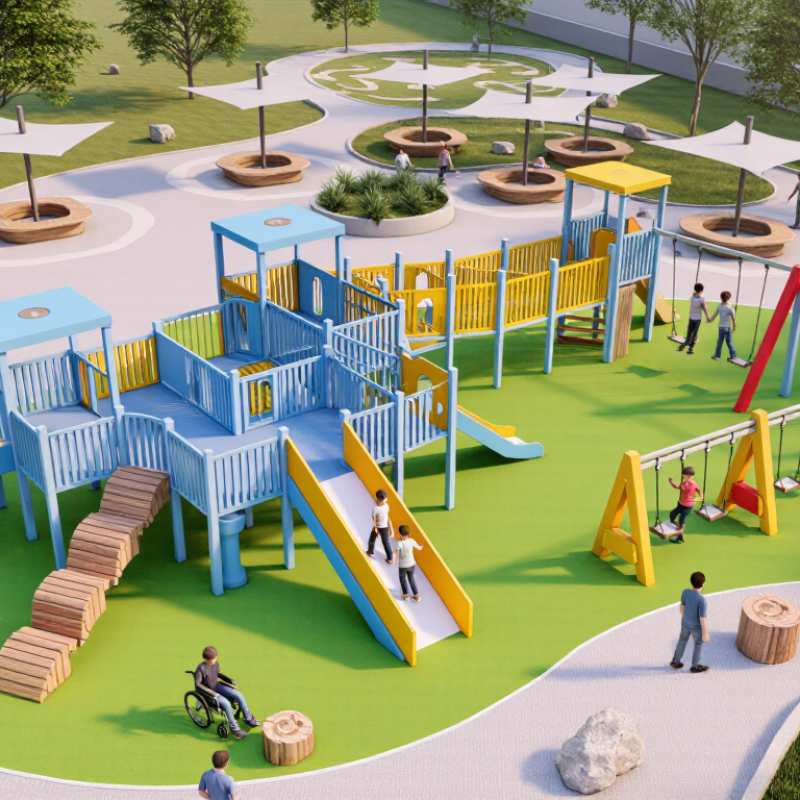
Park play equipment is more than a collection of slides and swings. It is a planned environment that supports movement, social learning, sensory exploration, and manageable risk. In 2026, leading equipment types include modular climbing towers, accessible swings, ground-level sensory panels, inclusive merry-go-rounds, nature-inspired structures, and small-scale fitness elements.
The strongest designs connect several activities in one compact layout. A child may climb a textured wall, cross a balance bridge, and reach a shaded slide. Another child can join from a transfer platform or a wheelchair-accessible route. The WHO 2020 Physical Activity Guidelines recommend at least 60 minutes of daily moderate-to-vigorous activity for children aged 5–17. Well-planned play areas can support that target without feeling like exercise.
Use matters more than novelty.
The National Recreation and Park Association reported in its 2024 Engagement with Parks study that 85% of U.S. adults visited a park or recreation facility during the previous year. That figure shows why equipment must serve different ages, abilities, and comfort levels. The U.S. Consumer Product Safety Commission also stresses protective surfacing, fall-zone planning, inspections, and age-appropriate design in its Public Playground Safety Handbook.
Yet, data cannot predict every real behavior. Children may ignore the intended route, crowd one platform, or turn a quiet corner into a racing lane. Designers should observe sites after opening and adjust maintenance, shade, signage, or circulation. A beautiful plan can still fail in daily use.
Definition and Role of Park Play Equipment in 2026
Reference framework: U.S. Consumer Product Safety Commission, Public Playground Safety Handbook; ASTM F1487 public-use playground equipment categories. Maximum score: 6 domains.
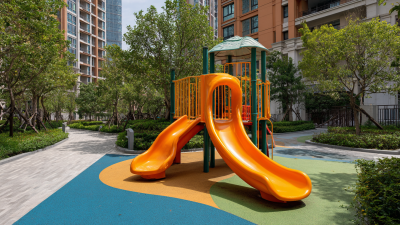
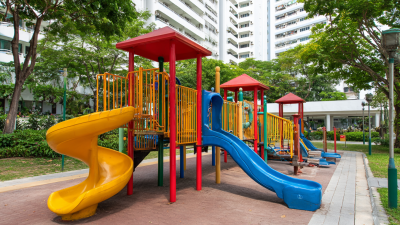
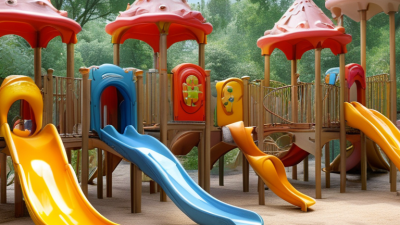
Modern playgrounds increasingly combine inclusive swings, sensory panels, climbing nets, slides, and low-impact balance equipment. Safety must guide every design choice.
The U.S. Consumer Product Safety Commission reports approximately 200,000 playground-related emergency department visits involving children each year. Its Public Playground Safety Handbook identifies falls, entrapment, and impact injuries as major concerns.
Designers should specify impact-attenuating surfacing, safe fall zones, guardrails, and equipment spacing. ASTM F1487 provides widely used performance and safety requirements for public playground equipment.
Regular inspections should check loose fasteners, worn surfacing, sharp edges, and trapped fingers. Small defects matter.
Accessibility requires more than adding one ramp. The 2010 ADA Standards require accessible routes and accessible play components in covered U.S. facilities. They also generally require at least 50% of elevated play components to connect through accessible routes, with specific exceptions. Ground-level options should include sensory activities, transfer features, and varied seating heights. EN 1176 offers another important reference for many international projects.
A practical site review should observe real use. Can a child using a mobility device reach the play area without crossing loose gravel? Can a caregiver stand nearby? Are tactile elements reachable from different heights? A compliant drawing may still create an uncomfortable experience. Shade, drainage, noise, and confusing circulation are often underestimated. Standards are essential, but human observation must challenge the checklist.
In 2026, park play equipment is becoming more age-specific, not simply bigger or brighter. For toddlers aged two to five, low climbing mounds, short slides, sensory panels, and bucket swings support balance and early confidence. Soft surfacing matters here because small falls happen often. I have seen children repeat a simple ramp until their steps become steadier. The layout should keep young users close to caregivers, with clear sightlines and shaded seating nearby. Some play areas still place toddler swings beside fast-moving climbers. That arrangement deserves a second look.
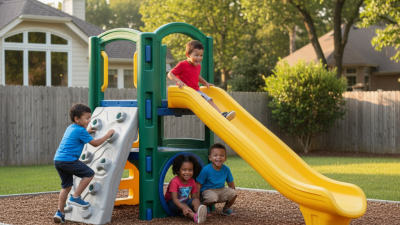
Children aged five to twelve often need varied challenges. Rope nets, moderate-height towers, tunnels, spinning elements, and linked bridges encourage strength, planning, and cooperative games. Adjustable difficulty is useful because a confident six-year-old and a cautious eleven-year-old may use one structure differently. Older children and teenagers benefit from larger climbing walls, obstacle courses, basket courts, and inclusive net structures that build endurance without forcing competition. Equipment should provide transfer spaces, supportive handholds, and routes for different abilities. In practice, successful parks mix active zones with quiet imaginative spaces. A wide platform can become a ship, lookout, or market. Designers sometimes overfill every corner, though. More equipment does not always create better play; crowding and noise can reduce its value. Regular inspections should check fasteners, surface wear, entrapment risks, and hot metal before opening.
What Are the 2026 Top Park Play Equipment Types?
Smart, Sustainable, and Inclusive Features in 2026 Playgrounds
In 2026, leading playgrounds will combine climbing towers, sensory panels, accessible swings, and nature-based play zones. Smart equipment may track temperature, surface conditions, and maintenance alerts. It should support safety, not replace human supervision. The National Recreation and Park Association’s 2024 research highlights rising demand for accessible, welcoming public spaces. That demand is becoming visible in wider paths, transfer platforms, and quieter retreat areas.
Inclusion must feel practical. The World Health Organization reports that about 1.3 billion people experience significant disability worldwide. A playground needs more than one accessible feature near the entrance. It needs connected routes, ground-level activities, shade, tactile surfaces, and seating beside play areas. Sustainable choices also matter. The 2023 Global Status Report for Buildings and Construction links the built environment to 37% of global energy-related emissions. Recycled materials, repairable parts, solar shade structures, and water-smart landscaping can reduce long-term pressure. Still, “green” materials are not automatically comfortable. Dark rubber can become painfully hot.
Tips: Test the space at noon. Listen from a wheelchair. Watch how children move. Ask local families before finalizing the design. Maintenance teams should review every sensor and fastener. Technology fails sometimes.
One weakness remains. Designers can overvalue screens and data dashboards. Children may need challenge, mud, balance, and small moments of uncertainty instead. The best 2026 playgrounds will use smart systems quietly, while keeping human play unmistakably central.
| Equipment Type | Primary Development Benefits | Typical Age Range | Smart Features for 2026 | Inclusive Design Features | Sustainable Design Options | Safety and Accessibility Considerations | Typical Space Requirement |
|---|---|---|---|---|---|---|---|
| Modular Climbing Structures | Develops upper-body strength, balance, coordination, confidence, and problem-solving skills. | 5–12 years Some low-height elements can serve younger children. |
Activity counters Condition monitoring QR maintenance records | Transfer platforms, multiple challenge levels, handholds with varied sizes, ground-level climbing panels, and routes suitable for different physical abilities. | Recycled-content plastic panels, certified timber, durable powder-coated steel, replaceable components, and permeable surfacing. | Continuous accessible routes, fall-height control, impact-attenuating surfacing, guardrails, and adequate clearance between activities. | Approx. 80–250 m², depending on height and layout. |
| Inclusive Swings | Supports vestibular development, body control, social interaction, and calming sensory movement. | 2–12 years Use should match the selected seat and manufacturer guidance. |
Usage monitoring Seat-condition alerts Digital inspections | High-back seats, harness options, full-support seats, nest or basket swings, wide transfer zones, and adjacent companion seating. | Recycled rubber or durable polymer seats, corrosion-resistant frames, replaceable chains, and responsibly sourced structural materials. | Separate bays for different swing types, protected transfer areas, clear circulation paths, and impact-absorbing ground cover. | Approx. 35–90 m² for a small multi-seat bay. |
| Accessible Ramps and Play Towers | Encourages imaginative play, navigation, social participation, and gross-motor development. | 2–12 years | Interactive sound panels Low-energy lighting Occupancy insights | Ramp-based access, wide platforms, low-gradient routes, tactile panels, quiet retreat areas, varied entry points, and ground-level play panels. | Modular construction, recycled decking materials, low-VOC coatings, shade trees, and rainwater-sensitive site design. | Firm and slip-resistant routes, edge protection, handrails where needed, appropriate turning space, and clear sightlines for caregivers. | Approx. 100–350 m² depending on tower height and number of routes. |
| Sensory Play Panels | Supports communication, fine-motor skills, focus, tactile exploration, and sensory regulation. | 2–10 years | Audio controls Solar-powered interaction Usage analytics | Visual, tactile, auditory, and low-stimulation options; accessible mounting heights; symbol-based activities; and quiet play alternatives. | Recycled HDPE panels, FSC-certified timber where appropriate, durable stainless-steel hardware, and passive designs that require no power. | Rounded edges, tamper-resistant fixings, low noise levels, non-toxic finishes, and sufficient space for wheelchair approach and turning. | Approx. 10–60 m² as a standalone activity zone. |
| Rotational and Spinning Equipment | Builds balance, spatial awareness, core strength, and cooperative play skills. | 5–12 years Low-speed options may suit younger children. |
Motion sensors Preventive maintenance alerts Activity tracking | Inclusive rotating platforms, handholds at different heights, controlled-speed designs, and clear approach zones. | Mechanically driven equipment with no external power requirement, recyclable metal components, replaceable bearings, and permeable drainage surfaces. | Controlled rotation, pinch-point protection, stable boarding surfaces, adequate fall zones, and separation from fixed obstacles. | Approx. 30–80 m² including the required clearance area. |
| Balance Trails and Stepping Elements | Improves dynamic balance, agility, coordination, lower-body strength, and risk assessment. | 3–12 years | Optional pressure sensors Digital inspection tags Adaptive lighting | Low and elevated routes, handrails, stable transfer points, contrasting colors, ground-level alternatives, and different difficulty settings. | Locally sourced timber, recycled rubber edging, modular footings, drought-tolerant planting, and permeable paving. | Consistent surface transitions, limited fall heights, non-slip materials, clear route markings, and accessible bypass routes. | Approx. 40–180 m² depending on trail length. |
| Nature-Based Play Features | Promotes imaginative play, environmental awareness, physical activity, and open-ended social interaction. | 2–12 years | Weather sensors Irrigation monitoring Interpretive QR content | Firm accessible paths, raised garden beds, sensory planting, shaded rest areas, varied textures, and play elements at different heights. | Native or climate-adapted plants, reclaimed logs where safe, rain gardens, natural shade, recycled edging, and reduced irrigation demand. | Non-toxic natural materials, regular inspection for splinters and decay, stable routes, visibility around vegetation, and accessible seating. | Approx. 100–500 m², depending on the landscape concept. |
| Interactive Digital and Musical Play | Encourages rhythm, creativity, collaborative play, auditory exploration, and active movement. | 3–12 years | Touch-free interaction Solar power Programmable sound and light | Volume control, visual feedback, tactile controls, seated and standing access, multilingual prompts, and non-digital alternatives. | Solar-assisted power, LED components, replaceable modules, recyclable housings, and automatic standby modes to reduce energy use. | Weatherproof electrical protection, low-voltage systems, slip-resistant flooring, controlled sound levels, and accessible approach space. | Approx. 20–100 m² depending on the number of stations. |
| Toddler and Early-Years Play Zones | Builds basic motor skills, sensory awareness, confidence, language development, and parallel play. | 6 months–5 years | Quiet-zone monitoring Digital inspections Temperature sensors | Low platforms, wide ramps, crawl-through spaces, sensory panels, caregiver seating, stroller access, and calm retreat areas. | Shade structures, recycled-content panels, low-maintenance surfacing, water-efficient landscaping, and durable replaceable parts. | Clearly separated from older children’s equipment, low fall heights, secure barriers where needed, soft surfacing, and strong caregiver visibility. | Approx. 50–180 m² for a dedicated early-years area. |
| Fitness and Multi-Generational Stations | Supports strength, mobility, flexibility, cardiovascular activity, and intergenerational participation. | 12+ years Equipment should be selected for age-appropriate use. |
Non-personal activity tracking Instruction screens Maintenance sensors | Accessible exercise stations, seated options, adjustable resistance, clear instructions, resting points, and routes connected to the main park path. | Manual equipment, recycled metal or plastic components, solar lighting, durable coatings, and low-water landscape integration. | Stable footing, clear instructional signage, equipment spacing, fall-risk management, and separation from fast-moving play equipment. | Approx. 80–250 m² for a compact circuit. |
Planning note: Space figures are typical planning ranges rather than universal standards. Final layouts should be verified against local accessibility, playground safety, surfacing, drainage, safeguarding, and inspection requirements.
What Are the 2026 Top Park Play Equipment Types?
Choosing public park equipment requires more than following popular design trends. Start with the neighborhood’s age groups, daily traffic, climate, and available space. A compact park may benefit from modular climbers, inclusive swings, sensory panels, and low-height balance paths. Larger sites can support adventure towers, slides, nature-inspired structures, and separate fitness stations.
Watch the ground conditions carefully. Soft soil, poor drainage, or intense sunlight can change equipment performance and visitor comfort. Measure clear zones around every component. Check shade patterns at different times of day. Accessibility also matters. Choose routes with firm surfaces, gentle slopes, transfer spaces, and play features reachable from mobility devices. In my experience, families notice these details quickly. A bright tower can still feel unwelcoming.
Tips: Ask residents what children actually enjoy. Review maintenance records before approving complex equipment. Select surfaces that remain usable after rain. Confirm age labels, fall protection, inspection access, and compliance with current safety standards. Avoid filling every corner. Open space supports running, social play, and supervision. A common planning mistake is choosing equipment by appearance alone. It may look impressive, but repairs can become expensive and frequent. Reconsider the budget annually, not just during installation. No plan is perfect. Leave room for feedback and small improvements.