Leave Your Message

How to Choose Large Outdoor Slides for Your Business?

Choosing Large Outdoor Slides for a business involves more than selecting the tallest or brightest model. A slide must attract attention, support safe play, and survive repeated daily use. It also needs to fit your site, customer age range, staffing capacity, and maintenance budget. A crowded family entertainment center demands different equipment from a hotel courtyard or public recreation park.

Dr. Joe Frost, a respected playground safety researcher, once emphasized, “Safety is the foundation of enjoyable play.” That principle should guide every purchasing decision. Look closely at platform height, access stairs, handrails, landing zones, guardrails, and impact-absorbing surfacing. Examine the slide’s material, surface temperature, drainage, fasteners, and resistance to ultraviolet exposure. Small details matter. A hot metal chute can quickly become unusable during summer afternoons.

Reliable suppliers should provide clear installation instructions, inspection guidance, warranty terms, and documentation for relevant safety standards. Ask how replacement parts are sourced. Ask how often the equipment requires professional inspection. The cheapest option may create higher costs through repairs, downtime, or customer complaints.

Experience also matters. Walk through the proposed layout with a child’s movement in mind. Can staff see the entrance and exit? Could two children collide near the landing area? Is the queue wide enough during peak hours? These questions are easy to overlook.

No selection process is perfect. Business owners may focus too heavily on appearance. That can be a mistake. The strongest choice balances visual appeal, operational reliability, user safety, and long-term value. This guide explains how to compare Large Outdoor Slides with greater confidence.
How to Choose Large Outdoor Slides for Your Business?

Understanding the Types of Large Outdoor Slides

How to Choose Large Outdoor Slides for Your Business?

Understanding the Types of Large Outdoor Slides

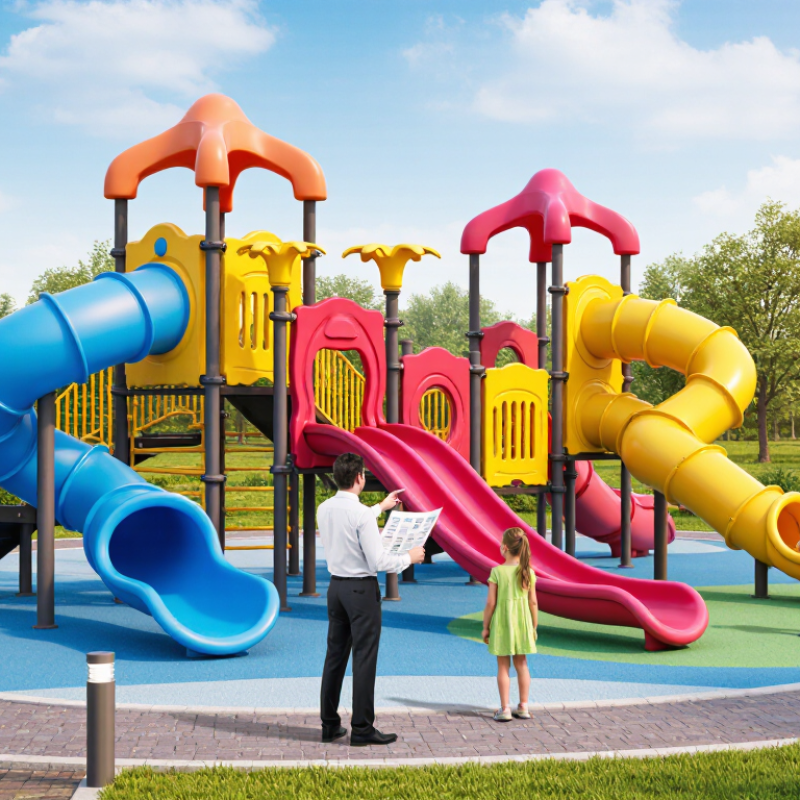
Large outdoor slides serve different visitor needs. Tube slides create enclosed, exciting journeys with controlled visibility. Wave slides add changing speed and movement. Spiral slides fit compact layouts, but they can slow traffic during busy periods. Racing slides support friendly competition and move several users through the attraction quickly. Embankment slides use natural slopes and often blend better with parks or resorts. Combination structures offer more play value, although they require stronger supervision and maintenance planning.

Safety must guide every type decision. The U.S. Consumer Product Safety Commission reports about 200,000 playground-related emergency department injuries among children annually. Its Public Playground Safety Handbook stresses suitable protective surfacing, fall-zone planning, and regular inspections. ASTM F1487 also provides widely used performance requirements for public playground equipment. A business should assess user age, available space, daily capacity, climate, and staff visibility. A taller slide can look impressive. Bigger is not automatically better. I would test the queue, exit area, and cleaning routine before approving the design.
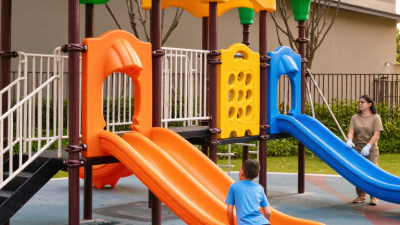
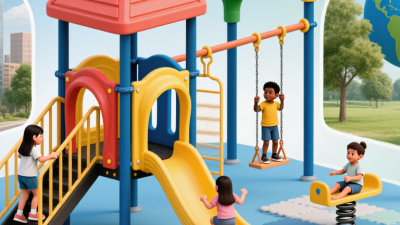
Tips: Match slide types with traffic goals. Choose tube slides for compact routes. Use racing slides for high throughput. Provide clear sightlines near every exit. Inspect joints, handrails, surfacing, and drainage frequently. Weather changes everything, especially heat and rain. One overlooked detail can become the expensive mistake.

Assessing Safety Standards and Material Quality

How to Choose Large Outdoor Slides for Your Business?

A large outdoor slide must meet safety standards before it impresses visitors. Check the requirements used in your region, such as EN 1176 or ASTM F1487. These standards address structural strength, fall zones, entrapment risks, guardrails, and safe access points. Ask the supplier for current test reports, installation instructions, and load specifications. Do not rely on attractive photos alone.

Material quality affects safety, comfort, and maintenance costs. UV-stabilized polyethylene can resist fading and cracking in strong sunlight. Fiberglass may provide a smooth sliding surface, but damaged areas need prompt repair. Stainless steel can be durable, yet it may become dangerously hot without suitable design and shade. Inspect seams, bolt covers, drainage points, and connection hardware. Sharp edges have no place on a public slide.

Walk around the slide as a child might. Look beneath platforms and near turns. Check whether small fingers, clothing, or shoelaces could become trapped. The landing area should use impact-absorbing surfacing and remain free from puddles, gravel, and loose objects. A professional installation team should anchor the structure according to ground conditions, not guesswork. Even strong materials can fail when foundations are poorly prepared.

A checklist is helpful. It is not enough.

Schedule documented inspections, especially after storms, heavy use, or vandalism. Review wear patterns with staff and listen to visitor complaints. One overlooked heat spot or loose fastener can change a safe experience quickly.

Matching Slide Design to Your Business Space

Choosing a large outdoor slide starts with the space, not the catalog. Measure usable ground, overhead clearance, access routes, and nearby seating. A slide that looks impressive online may overwhelm a narrow courtyard. Leave clear circulation around the exit. Children should not cross a queue to reach another activity. I have seen layouts fail because operators measured the platform but forgot the landing zone. That mistake is expensive.

Match the slide’s shape to customer flow. A straight slide suits compact spaces and allows staff to monitor riders easily. A spiral or multi-lane design needs more width, stronger visual separation, and careful queue planning. For a resort pool area, water-fed lanes may fit the setting, while a dry play center may need impact-absorbing surfacing beneath the runout. Check drainage, sun exposure, wind, and maintenance access before approving the design. These details influence comfort, operating hours, and long-term costs.

Use scale to support your business model. A family venue may benefit from one gentle lane beside a larger challenge slide. A high-volume park may require parallel lanes to reduce waiting. Keep sightlines open from the reception desk or staff station. Review height limits, user age ranges, structural loads, and local inspection requirements with a qualified professional. Do not rely on attractive renderings alone. I once favored a taller concept for visibility, but its shadow covered the seating area during peak hours. The better choice was less dramatic, yet more practical. Recheck the plan at different times of day.

Comparing Installation, Maintenance, and Durability

Choosing a large outdoor slide begins with installation, not appearance. A qualified installer should verify soil strength, drainage, fall zones, and anchoring before assembly. A tall slide can magnify small errors. Uneven ground may create unsafe landings, while poor drainage accelerates corrosion around posts. The U.S. Consumer Product Safety Commission reports about 205,000 playground-equipment injuries annually in the United States, based on 2001–2008 emergency-department data. Falls caused roughly 75% of those injuries, according to its Public Playground Safety Handbook. That figure makes impact-absorbing surfacing and accurate installation commercial priorities.

Maintenance affects operating cost and customer trust. Inspect slide joints, handrails, platforms, anchors, and surfacing regularly. Look for sharp edges, loose bolts, fading, cracks, and water pooling. EN 1176 guidance separates routine visual checks, operational inspections, and annual major inspections. Keep dated records with photographs. They reveal slow damage that staff may overlook. Durability depends on UV resistance, drainage design, coating quality, and material thickness. Stainless fixings can help, but they do not rescue a poorly engineered structure. My practical concern is simple: many buyers compare purchase prices, then underestimate access equipment and closure time during repairs.

Tips: Request a site-specific foundation plan and written inspection schedule. Ask how replacement parts are handled after several years. Test the slide during different temperatures, because surfaces can feel noticeably faster or hotter. Leave extra budget for surfacing renewal. A perfect forecast is impossible. That is worth admitting.

How to Choose Large Outdoor Slides for Your Business? - Comparing Installation, Maintenance, and Durability

Slide Configuration Typical Height Primary Construction Typical Installation Time* Routine Maintenance Expected Service Life** Durability Rating Best Business Use
Single Straight Slide 2.4–3.6 m Rotational-molded polyethylene or fiberglass sliding bed with galvanized steel supports 2–4 working days after the foundation has cured Weekly visual inspection; monthly cleaning; seasonal checks of bolts, anchors, handrails, and impact-absorbing surfacing 10–15 years with regular commercial maintenance ★★★★☆ Family entertainment centers, resorts, community parks, and compact commercial play areas
Double-Lane Racing Slide 2.4–4.0 m Two molded plastic or fiberglass lanes with a shared steel or aluminum support structure 3–6 working days after the foundation has cured Inspect lane joints and transition areas frequently; clean both lanes; verify that users cannot access the gap between lanes 10–15 years with controlled use and timely repairs ★★★★☆ High-throughput venues where two users can slide simultaneously
Tube Slide 3.0–6.0 m UV-stabilized polyethylene or fiberglass tube sections supported by a steel frame 4–8 working days after the foundation has cured Clean the interior and exterior; inspect section connections, dark areas, drainage points, and enclosed visibility zones 10–15 years, depending on UV exposure and ventilation ★★★★☆ Water parks, resorts, indoor-outdoor attractions, and venues seeking a themed experience
Stainless-Steel Speed Slide 3.0–6.0 m Welded stainless-steel sliding surface with structural steel supports and protective edge treatment 5–10 working days after the foundation has cured Remove dirt and salt deposits; inspect welds, edges, fasteners, drainage, and corrosion-prone connections 15–25 years when correctly specified and maintained ★★★★★ Heavy-use parks and commercial venues requiring a long-lasting, premium slide surface
Fiberglass Spiral Slide 3.0–5.5 m Gel-coated fiberglass sections with a galvanized or powder-coated support tower 5–10 working days after the foundation has cured Wash with non-abrasive products; inspect the gel coat for cracks, fading, blistering, and exposed fibers 10–20 years, depending on coating care and weather exposure ★★★★☆ Attractions requiring a compact footprint and a visually distinctive layout
Water Slide 3.0–12.0 m Fiberglass or reinforced polymer slide sections with water pumps, piping, splash control, and steel supports 2–6 weeks, including mechanical and water-system commissioning Daily cleaning during operation; pump and filter checks; water-quality testing; frequent inspection of seams, flanges, drains, and support structures 10–20 years, depending on water chemistry, UV exposure, and operating hours ★★★★☆ Water parks, hotel resorts, aquatic centers, and seasonal attractions
Custom Multi-Level Slide Tower 4.0–10.0 m Mixed materials, typically steel framing with polyethylene, fiberglass, or stainless-steel slide sections 2–6 weeks, excluding permitting, site preparation, and foundation work Scheduled inspections of every access point, platform, guardrail, connector, slide section, and impact-absorbing surface 15–25 years with a documented inspection and replacement program ★★★★★ Large resorts, destination parks, commercial playgrounds, and high-capacity recreation sites

* Installation time: Typical field assembly estimates for an accessible site with prepared foundations, normal weather, and standard equipment access. Actual schedules vary by design, permits, ground conditions, and inspection requirements.

** Expected service life: Planning ranges rather than guarantees. Commercial service life depends on usage volume, climate, UV exposure, vandalism, water chemistry, cleaning procedures, and compliance with the applicable local playground or amusement-equipment standards.

Evaluating Cost, Customer Appeal, and Long-Term Value

Choosing a large outdoor slide is a business decision, not a size contest. Price matters, but total cost matters more. Add delivery, surfacing, installation, inspections, cleaning, repairs, and seasonal storage. A cheaper unit may need earlier component replacement. That can erase the original saving. The National Recreation and Park Association’s 2024 Engagement with Parks Report found that 95% of U.S. adults view parks as important to quality of life. A clear, age-appropriate slide can encourage repeat visits. Appeal also depends on comfort, access, shade, and queue flow.

Customer appeal should be tested beside the entrance, not guessed from a catalogue. Watch where families pause. Measure queue length during busy periods. A wide platform, smooth transitions, and visible exits can reduce hesitation. The U.S. Consumer Product Safety Commission estimates that playground injuries send more than 200,000 children to emergency departments annually. Design quality protects trust as well as revenue. Still, I would not promise a fixed payback period. Weather, local income, staffing, and school holidays can change the result.

Tips: Compare three quotes using five-year ownership costs. Request material specifications, load ratings, warranty terms, and replacement-part pricing. Check drainage after heavy rain. Inspect fasteners monthly. Use impact-absorbing surfacing suited to the fall height. ASTM F1487 offers a useful commercial playground safety benchmark, but local requirements still need confirmation. Leave room for service access. Dramatic height attracts attention. It can also increase maintenance and supervision demands.

How to Choose Large Outdoor Slides for Your Business?

Estimated 10-year ownership cost by commercial slide format, including equipment, installation, safety surfacing, and routine maintenance.

Large custom tower slides usually require the highest initial investment, but they can offer stronger customer appeal and higher visitor capacity. Final costs vary by site preparation, local labor rates, surfacing requirements, climate, and inspection standards.