+86-13901441113


Choosing Playground Nursery equipment is more than selecting colorful slides and climbing frames. Global buyers need safe design, dependable materials, and practical support after delivery. A nursery playground should invite movement, imagination, and social learning without creating unnecessary risks.
Playground Nursery suppliers with real industry experience can explain material choices clearly. Powder-coated steel, UV-resistant plastic, rounded edges, and secure fasteners matter in daily use. A reliable supplier should share product specifications, safety test reports, installation guidance, and maintenance instructions. These documents help buyers compare quality instead of judging equipment by appearance alone.
Every market has different climate conditions, site layouts, and safety expectations. Coastal air may accelerate corrosion. Strong sunlight can weaken unsuitable plastic. A crowded urban nursery may need compact equipment and softer impact surfaces. Experienced suppliers should ask these questions before recommending a solution. That process shows expertise and respect for local requirements.
Still, no product is flawless. Even durable equipment needs inspection, cleaning, and timely repairs. Some buyers may focus heavily on price and overlook installation quality. That choice can create problems later. Honest communication is therefore essential, especially when delivery, assembly, or customization involves several countries. The strongest Playground Nursery partners offer transparent quotations, responsive service, and realistic timelines. Their value is not limited to one shipment. It continues through safer play, easier management, and better long-term confidence.
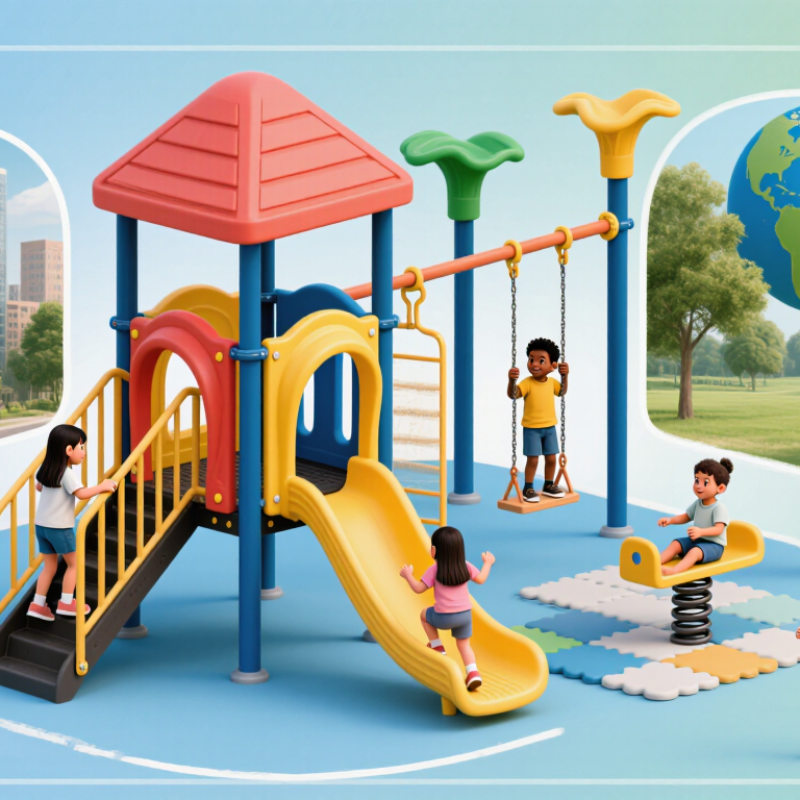
Why Choose Playground Nursery Equipment for Global Buyers?
What Is Playground Nursery Equipment?
Playground nursery equipment is play infrastructure designed for young children, usually from two to six years old. It includes low slides, small climbing frames, balance beams, swings, sensory panels, sand areas, and soft-play structures. Unlike general playground equipment, it considers shorter reach, developing coordination, limited risk awareness, and frequent adult supervision. A platform should feel challenging, not intimidating. Small details matter, such as rounded edges, visible handrails, non-slip steps, and surfaces that are easy to clean.
The World Health Organization’s Guidelines on Physical Activity, Sedentary Behaviour and Sleep recommend at least 180 minutes of physical activity daily for children aged three to four. Well-planned equipment can support climbing, balancing, crawling, and social play within that routine. The global playground equipment market was valued at approximately 5.8 billion U.S. dollars in 2023, according to Grand View Research. This growth reflects demand for active early-learning spaces, but market size alone cannot prove quality.
For global buyers, specification checks are essential. The U.S. Consumer Product Safety Commission recommends protective surfacing and suitable use zones around play structures. Buyers should also review EN 1176 or equivalent local standards, installation instructions, material certificates, drainage, and replacement-part access. Weather changes everything. A metal surface may become dangerously hot, while untreated wood can absorb moisture. No checklist is perfect. Some buyers still focus on bright colors and low prices, then discover cleaning problems, unclear manuals, or difficult maintenance after installation. Practical testing with children and caregivers remains valuable, even when the paperwork looks complete.
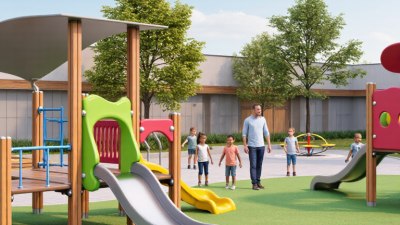
Why Choose Playground Nursery Equipment for Global Buyers?
Safety begins with the surface beneath a child’s feet. The U.S. Consumer Product Safety Commission reports about 200,000 playground injuries annually among children under 14. Falls cause nearly 79% of these injuries, according to its Public Playground Safety Handbook. Global buyers should therefore check impact-attenuating surfacing, guarded platforms, rounded edges, and correct fall zones. Equipment should also follow recognized standards, such as ASTM F1487 or EN 1176, according to the destination market. Independent testing matters. So does careful installation.
Development features deserve equal attention. WHO’s 2019 physical activity guidelines recommend at least 180 minutes of daily activity for children aged three to four. For ages five to 17, WHO recommends an average of 60 minutes of moderate-to-vigorous activity daily. Climbing panels, balance beams, crawl tunnels, and low stepping elements can support strength, coordination, and confidence. Adjustable challenges are useful. They let children try, fail safely, and try again.
Designers sometimes add too many exciting elements. That can create crowding, unclear movement paths, or supervision problems. A quieter corner may support imaginative play better than another climbing tower. Buyers should inspect drainage, fasteners, cleanability, accessibility, and replacement-part availability. A beautiful layout can still fail during rainy seasons or busy morning use. No checklist replaces observing real children in the space.
Playground nursery equipment can turn early learning into active, observable practice. In a well-planned setting, children climb, balance, crawl, and negotiate space. A low platform builds confidence through manageable risk. Stepping stones encourage counting, rhythm, and body control. These physical challenges also create natural opportunities for language. Children describe height, distance, speed, and direction while playing together.
Educators can extend the experience with simple prompts. “Which path feels safer?” “How many steps reach the mat?” A water channel may introduce flow, measurement, and cooperation. Loose parts, such as hoops and soft blocks, support imaginative construction without prescribing one correct answer. I have found that open-ended equipment often produces richer conversations than brightly decorated structures. Still, adult guidance matters. Too many prompts can interrupt a child’s concentration.
Not every activity works equally well. A climbing panel may excite one child and worry another. Equipment should match children’s ages, abilities, and developing confidence. Secure edges, stable surfaces, suitable fall protection, and regular inspections are essential. Local safety requirements should guide installation and maintenance. Accessible routes also help more children participate meaningfully. A teacher can observe grip strength, turn-taking, problem-solving, and emotional responses during play. These notes can inform future activities, although observation is never perfectly objective. Children may behave differently on rainy days, after rest time, or beside unfamiliar peers.
| Equipment Category | Typical Age Range | Early Learning Support | Key Development Areas | Important Design Features | Considerations for Global Buyers |
|---|---|---|---|---|---|
| Low-Level Climbing Structures | 2–5 years | Children plan routes, make choices, judge distance and practise controlled movement while climbing and descending. | Problem-solving Balance Confidence | Short access heights, secure handholds, stable platforms, protected edges and impact-absorbing surfacing where required. | Confirm that the design is suitable for the intended age group and complies with the playground safety requirements applicable in the destination market. |
| Slides with Safe Access | 2–5 years | Children experience sequencing, turn-taking and cause-and-effect relationships while moving through a predictable play routine. | Sequencing Social skills Risk awareness | Appropriate entry and exit zones, guardrails, smooth transitions, sufficient run-out space and no exposed entrapment hazards. | Check that the slide materials tolerate local sunlight, humidity, temperature changes and cleaning procedures. |
| Balance Beams and Stepping Elements | 2–5 years | Children adjust posture, regulate speed and focus attention while moving across changing surfaces. | Coordination Body awareness Concentration | Non-slip surfaces, rounded edges, stable foundations, varied but age-appropriate challenge levels and clear separation between activities. | Choose surfaces that remain slip-resistant during local wet or dusty conditions and can be inspected easily by staff. |
| Swings and Supported Motion Equipment | 2–5 years | Rhythmic movement helps children practise timing, anticipation and body control; shared equipment also encourages waiting and cooperation. | Rhythm Motor control Cooperation | Age-appropriate seats, secure suspension points, adequate spacing, defined fall zones and durable moving components. | Plan for routine inspections of chains, connectors, seats and surfacing, especially in coastal, high-rainfall or high-use environments. |
| Sand and Water Play Stations | 2–5 years | Open-ended sensory play allows children to compare quantities, test simple ideas, create structures and use descriptive language. | Early mathematics Language Creativity | Rounded, easy-clean surfaces; accessible work areas; drainage; non-toxic, child-safe materials; and supervised water management. | Consider local water availability, drainage requirements, hygiene procedures and resistance to mould, corrosion and staining. |
| Role-Play Houses and Pretend-Play Panels | 2–6 years | Children recreate familiar situations, negotiate roles and use symbols to represent people, objects and events. | Communication Imagination Emotional learning | Clear visibility for supervision, sufficient internal space, smooth surfaces, accessible entrances and culturally neutral or adaptable play prompts. | Use weather-resistant finishes and select layouts that can support different languages, cultural contexts and teaching approaches. |
| Musical and Interactive Panels | 2–6 years | Children explore sound, patterns, cause and effect, and turn-taking through hands-on group activities. | Listening Pattern recognition Fine motor skills | Securely mounted components, controlled sound levels, accessible reach ranges, rounded operating parts and simple visual instructions. | Verify resistance to ultraviolet exposure, moisture and repeated cleaning; avoid components that require frequent specialist servicing. |
| Inclusive Access Features | 2–6 years | Multiple access routes and varied participation options allow more children to play, communicate and learn together. | Participation Empathy Independence | Firm accessible routes, transfer options, suitable reach ranges, ground-level activities, seating and clear circulation space. | Review accessibility requirements in the target country and assess the complete play environment, including routes, gates, surfacing and supervision points. |
| Impact-Absorbing Safety Surfacing | All active play areas | Appropriate surfacing supports safer movement and allows children to practise physical skills with an age-appropriate level of challenge. | Physical confidence Movement exploration Safety awareness | Correct critical fall-height performance, continuous coverage in designated fall zones, drainage and regular condition checks. | Specify performance requirements rather than relying only on appearance; local climate, maintenance capacity and inspection frequency affect long-term performance. |
| Modular Activity Systems | 2–6 years | Different activity zones support free choice, small-group interaction and progressive challenges as children develop. | Self-direction Executive function Peer learning | Logical circulation, age separation where appropriate, clear sightlines, replaceable components and flexible configurations. | Modularity can simplify phased purchasing, shipping and future expansion, but every installed configuration should be assessed as a complete system. |
Choosing nursery equipment for global use requires more than attractive colors and compact packaging. Materials must tolerate humidity, sunlight, temperature changes, and frequent cleaning. Powder-coated steel offers strength, while high-density polyethylene resists moisture and splintering. Solid timber can feel warm, but it needs sealed surfaces and regular inspection. Rounded edges, secure fasteners, and non-slip steps reduce everyday risks. Local safety requirements should guide final specifications, because standards differ between regions.
Tips: Ask for material certificates. Check welds and joints. Test surface temperatures in direct sunlight. Confirm replacement parts before ordering. A small sample often reveals more than a polished catalogue image.
Design should support different nursery routines and room sizes. Modular climbing frames, low platforms, and movable storage help educators adapt activity areas. Clear sightlines are essential, especially in busy classrooms. Ventilation gaps can reduce trapped moisture in tropical settings. In colder regions, smooth surfaces should remain comfortable for children wearing thicker clothing. From practical project reviews, installation instructions often need better diagrams and clearer language. That weakness is easy to overlook. Global buyers should request assembly trials, maintenance schedules, and photographs from comparable environments. Even good equipment may need adjustment after real children use it.
Impact-attenuating surfacing materials and their typical critical fall heights for nursery playground design.
Recycled rubber provides the highest listed critical fall height, while sand and pea gravel provide lower protection heights. For global nursery environments, buyers should also consider drainage, UV exposure, hygiene, accessibility, local climate, and the safety standard required in the installation country. Values are converted from feet to metres and referenced from the U.S. Consumer Product Safety Commission Public Playground Safety Handbook, Table 2; local regulations and certified testing should always take priority.
Global buyers should evaluate playground nursery equipment through evidence, not attractive catalog images. Ask for material specifications, safety certificates, load-test records, and installation drawings. Check whether documents match the exact model, not a similar product.
Examine the equipment closely. Smooth welds matter. Rounded edges reduce injury risks. UV-resistant plastics help in sunny regions, while rust protection supports humid climates. Measure platform heights, guardrails, fall zones, and access points against local requirements. Request a sample or factory video when possible. A small detail can reveal poor workmanship.
Supplier reliability also deserves careful testing. Review production experience, quality-control procedures, packaging methods, and spare-parts support. Independent inspection before shipment can confirm dimensions, colors, fasteners, and surface finishes. Ask how the supplier handles design changes and damaged components. A clear answer is valuable.
Do not trust perfect paperwork blindly. Certificates may be outdated, incomplete, or unrelated to the final design. We once overlooked packaging strength during evaluation, and transport damage became an expensive lesson. Buyers should compare references, inspect samples, and keep written approval records. Good suppliers welcome detailed questions, even uncomfortable ones.