+86-13901441113


A lively park can begin with a simple sound: children laughing as they climb, swing, and race across a play area. Park Play Equipment gives families more than a place to pass the time. It can invite movement, imaginative play, and friendly moments between children of different ages. But not every playground needs the same mix. Space, age range, accessibility, and maintenance all shape what works best.
Common choices include swings, slides, climbing structures, and seesaws. Swings offer a familiar back-and-forth rhythm. Slides bring quick thrills. Climbing equipment challenges balance and coordination, while seesaws encourage children to cooperate. Some parks also add spring riders, spinning features, or nature-inspired play elements. Each option has trade-offs. A tall climbing tower may look exciting, yet younger children might need easier routes and closer supervision. Small details matter, too: shaded seating, clear sightlines, and surfaces that feel comfortable underfoot can change how welcoming a play area feels.
Choosing well takes more than picking the most colorful equipment. Park planners and caregivers should consider the children who will use it, the available space, and how equipment will be inspected and maintained. There is no perfect layout. A modest playground can serve a neighborhood beautifully, while an impressive one may miss the mark if it leaves some children out. The following guide explores the top types of Park Play Equipment and the practical strengths each can bring to a park.
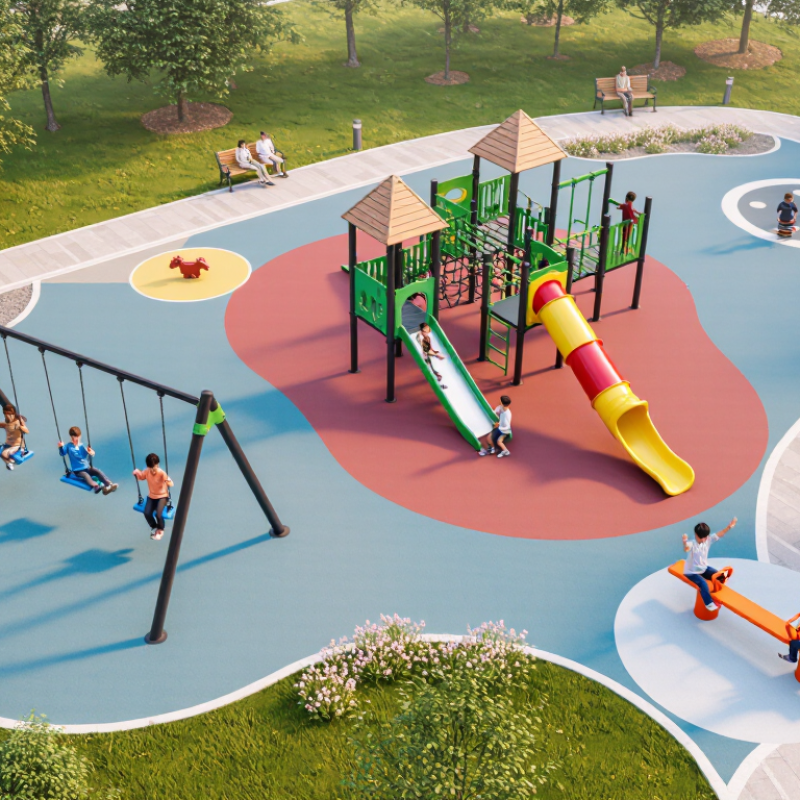
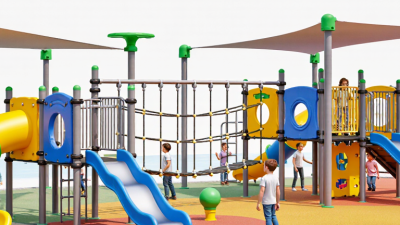
Park play equipment usually falls into several practical categories. Swings provide simple movement and appeal to different age groups. Belt seats suit confident users, while bucket seats offer extra support for younger children. Slides add speed, height, and a clear physical challenge. Short slides can help beginners feel comfortable.
Climbing equipment develops grip strength, coordination, and problem-solving skills. It may include nets, ladders, climbing walls, or overhead bars. Balance equipment, such as stepping pods and low beams, encourages careful movement. These features work well when placed near softer safety surfacing. Imaginative play structures create spaces for role-play, conversation, and quiet discovery. A small play house can become a shop, boat, or hiding place. Children often invent better games than designers expect.
Inclusive equipment should support different abilities without isolating users. Ground-level activities, transfer platforms, wide pathways, and sensory panels can make a playground more welcoming. From site observations, shade and clear sightlines matter as much as the equipment itself. Adults need comfortable viewing areas. That detail is sometimes missed.
Tips: Check age labels, fall zones, surface condition, and loose fittings regularly. Keep equipment clean and dry when possible. Choose varied heights, but avoid unnecessary complexity. A playground may look impressive, yet still feel tiring or confusing. Test the layout from a child’s viewpoint before installation. Safety planning should follow local standards and qualified inspection advice.
Traditional swings, slides, and climbers remain popular because children can use them in many ways. A swing offers a steady rhythm: small pushes become longer arcs as a child gains confidence. The seats should fit the intended age group, and the surrounding area needs enough clear space for moving legs and safe entry. Check chains, seats, and support points regularly. Small wear can be easy to miss.
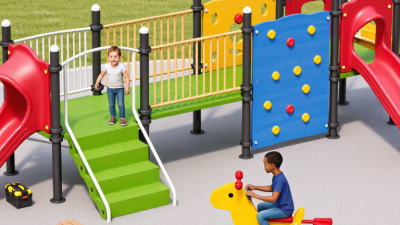
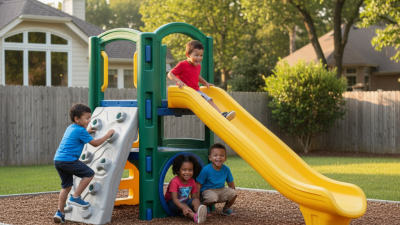
Slides add a different kind of challenge. Children climb the steps, pause at the top, then decide when to descend. A low platform and handrails can help younger users manage that moment. Surface temperature matters, too; a slide exposed to strong sun may become uncomfortable to touch. Climbers build grip, balance, and coordination through bars, nets, or angled panels. Give children more than one route, including an easy way down. It helps.
These structures work best when their layout leaves room for people to move without crossing active play areas. A swing placed beside a slide exit, for example, can create avoidable congestion. Adults should check for loose fasteners, damaged surfaces, and debris, while following the equipment’s age and use guidance. No design removes every risk. Even a familiar playground deserves a fresh look after busy weekends or rough weather.
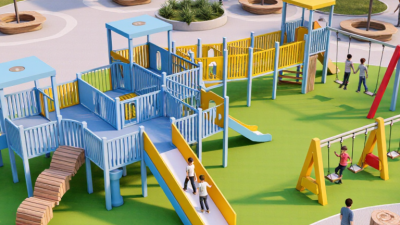
Imaginative and themed play structures turn an ordinary park visit into a story children can shape themselves. A wooden-look ship might have a low deck, a broad ramp, and a wheel that invites pretend voyages. A nature theme could use leaf-shaped panels, climbing logs, and small openings that resemble animal dens. These details give children prompts without dictating exactly how to play. Let them decide who is captain, explorer, or lookout.
Good design balances atmosphere with practical use. Clear sightlines help caregivers supervise, while varied routes let children choose between climbing, crawling, and quieter role-play. Designers should consider different ages and abilities, including firm access paths and play features reachable from seated positions. Surfaces need regular inspection for loose fasteners, splinters, and worn areas. Small details matter.
Themes work best when they support play rather than crowd it with decoration. A pretend lookout can be exciting, but an overly enclosed platform may make supervision harder. That trade-off deserves attention. Parks also benefit from durable, weather-suitable materials and enough open space around busy entrances. In practice, children may use a themed structure in unexpected ways; a pretend cave can become a shop by lunchtime. Allowing that flexibility often makes the equipment more inviting over time.
| Play Structure Type | Common Design Elements | Imaginative Play Opportunities | Skills Encouraged | Planning Considerations |
|---|---|---|---|---|
| Adventure and Castle Structures | Towers, bridges, tunnels, lookout points, and climbing routes | Children can invent quests, explore imaginary kingdoms, or play at being explorers. | Balance, coordination, problem-solving, and cooperative play | Provide clear sightlines, age-appropriate access routes, and protective surfacing beneath elevated areas. |
| Nature and Woodland Structures | Treehouse-style platforms, log-look climbers, leaf-shaped panels, and nature-inspired forms | Encourages pretend camping, wildlife discovery, and stories about forests and outdoor adventures. | Creative thinking, sensory exploration, and gross motor development | Choose durable, weather-suitable materials and check that decorative details do not create snag or entrapment hazards. |
| Transportation-Themed Structures | Play vehicles, steering wheels, panels, crawl-through sections, and platform “stations” | Supports make-believe journeys, role-play as drivers or passengers, and shared storytelling. | Communication, turn-taking, imaginative thinking, and coordination | Include accessible ground-level play features and enough space for children to move around the structure. |
| Underwater and Marine Structures | Wave-shaped panels, sea-creature forms, lookout windows, and tunnel elements | Children can pretend to explore the ocean, operate a submarine, or discover marine life. | Social play, language development, and spatial awareness | Use durable finishes suited to outdoor exposure and make sure openings and enclosed spaces are designed for safe supervision. |
| Community and Role-Play Structures | Market stalls, playhouses, counters, panels, and seating areas | Provides settings for pretend shops, homes, cafés, and other familiar community roles. | Cooperation, conversation, empathy, and creative expression | Place quieter role-play areas where they can coexist with more active play, and include features usable by children with different abilities. |
Selection note: Choose equipment for the intended age groups, site conditions, accessibility goals, and applicable playground safety requirements.
Inclusive and accessible playground equipment helps more children play together, rather than separating children by ability. A CDC analysis found that about 1 in 6 U.S. children aged 3–17 had a developmental disability during 2009–2017. That figure covers varied needs; it is not a measure of mobility disability alone. Still, it underscores why playgrounds should offer different ways to move, explore, and communicate. A wide ramp, a ground-level spinner, and a tactile panel can invite participation without requiring every child to use the same route. The U.S. Access Board’s accessibility guidelines for play areas provide useful technical guidance for designers.
Tips: Pair accessible routes with activities at ground level. Add transfer platforms, firm surfacing, clear signs, and quiet spots near busy equipment. Check that a wheelchair user can reach the activity, not merely enter the playground. Ask children and caregivers to test the layout before installation.
Small details matter. A transfer platform may be technically present but difficult to use if it sits far from a caregiver’s reach. Shade and seating can help families stay longer, though they are easy to overlook. No design fits every child, and that is worth admitting. Review the space with local users, then adjust what does not work.
What Are the Top Types of Park Play Equipment?
Safety, Materials, and Age-Appropriate Design
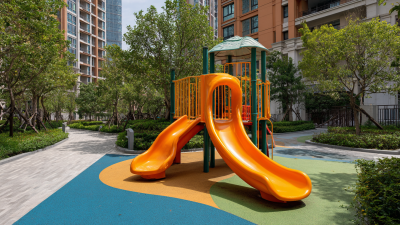
Climbers, swings, slides, and balance features can all support active play. Their value depends on thoughtful layout, sturdy materials, and age-appropriate challenges. The U.S. Consumer Product Safety Commission’s Public Playground Safety Handbook reports that falls account for about 79 percent of playground injuries. That figure makes the ground surface as important as the equipment. Loose-fill surfacing, such as engineered wood fiber, needs regular checks for displacement and compaction. Poured-in-place rubber offers a more even surface, but damaged areas still need prompt attention. No surface removes every risk.
Materials also shape long-term safety. Coated metal can resist weather, while properly maintained wood can offer a natural feel; both require inspection for sharp edges, splinters, rust, or loose fasteners. The CPSC handbook advises protective surfacing beneath and around equipment, extending at least six feet in many cases. Check the specific equipment layout, since swing zones require additional clearance. Small details matter. A loose bolt is easy to miss.
Age labels should guide—not replace—adult judgment. Toddlers benefit from low platforms, short slides, and handholds they can grasp securely. Older children may enjoy taller climbers and more complex routes, with clear separation from younger play areas. The American Academy of Pediatrics has cited roughly 200,000 playground-related injuries treated in U.S. emergency departments annually. The number is a reminder, not a prediction for any single park. Regular inspections help, though busy sites can still develop problems between checks.