+86-13901441113


Choosing the right Playground Facilities for a school requires more than bright colors and attractive equipment. A successful space should support movement, imagination, cooperation, and safe challenges. It must also reflect students’ ages, abilities, cultural backgrounds, and daily needs. A climbing structure may build strength, while balance beams can develop coordination and confidence. Shaded seating gives children a quieter place to recover, observe, or talk with friends. Small details matter.
Tim Gill, a respected play researcher and author, has said, “Risk is an essential component of childhood.” His view reminds school leaders that safety does not mean removing every challenge. Instead, equipment should offer manageable risks, clear visibility, durable materials, and surfaces designed to reduce serious injuries. Accessibility is equally important. Inclusive swings, ramps, sensory features, and transfer platforms can help more children participate without feeling separated. Playground Facilities should invite cooperation, not create a narrow path for only athletic students.
Good planning also considers supervision, maintenance, drainage, heat, and future repairs. These practical issues are sometimes ignored during attractive design presentations. That is a weakness. A playground may look impressive on opening day but fail if staff cannot inspect it regularly. Schools should consult teachers, children, families, accessibility specialists, and qualified safety professionals before purchasing equipment. No single facility is perfect. The best choice balances developmental value, inclusion, budget, and long-term reliability. This article examines which facilities serve schools most effectively and where common design assumptions deserve a second look.
What Type of Playground Facilities Are Best for Schools?
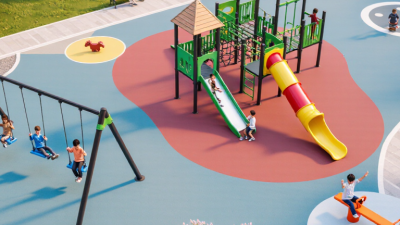
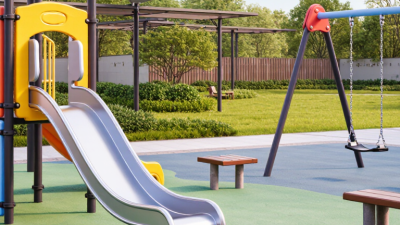
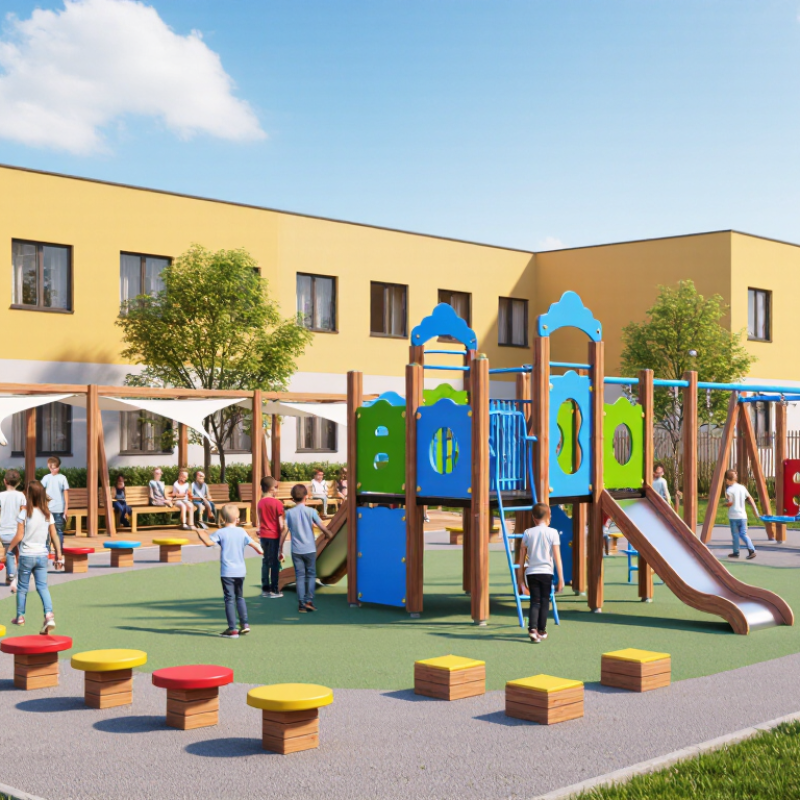
School playgrounds should offer varied facilities for different ages, abilities, and energy levels. Climbing frames build strength and coordination. Slides add excitement and support spatial awareness. Swings remain popular, but they need generous spacing and soft landing surfaces.
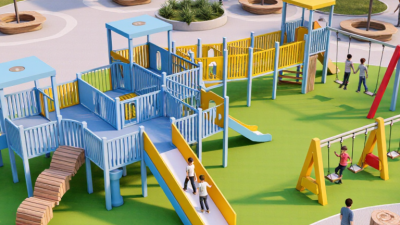
A balanced school playground can include balance beams, stepping stones, and low obstacle paths. These features encourage movement without making every activity competitive. A shaded reading corner gives children a quieter option. It may contain seats, sensory panels, or simple outdoor games. Accessible ramps and transfer platforms help more pupils join active play. Clear pathways also support children using mobility equipment.
Safety depends on design, maintenance, and daily supervision. Impact-absorbing surfacing should cover fall zones around climbing and swinging equipment. Staff should check loose bolts, sharp edges, damaged surfaces, and standing water regularly. Equipment should suit the children’s age and physical development. Mixed-age areas can work, but they require careful zoning and visibility.
No layout is perfect. A large climbing structure may look impressive, yet it can create queues and conflict during busy breaks. Schools should observe how pupils actually use each facility. A quiet area might be ignored at first, then become essential for children who need space. Regular feedback can reveal problems that a planning document misses. The best facilities often grow from small adjustments, not expensive additions.
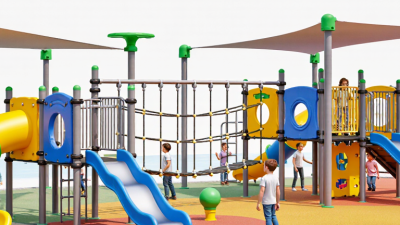
Safety guidance from the U.S. Consumer Product Safety Commission recommends a minimum use zone of 6 feet around most stationary playground equipment, including slides, climbers, seesaws, and merry-go-rounds. Swings require additional clearance in the direction of travel, typically twice the height of the swing pivot. Schools should combine age-appropriate climbing, sliding, swinging, and inclusive ground-level activities while preserving these clearances.
Source: U.S. Consumer Product Safety Commission, Public Playground Safety Handbook.
The best school playground facilities combine active play with measurable safety and practical accessibility. Equipment should match children’s ages, abilities, and expected movement patterns. Protective surfacing must reduce injury risks beneath climbing areas and slides. It should also extend across every required fall zone. Hard edges, exposed bolts, and narrow gaps need regular attention. Small details matter.
Accessible routes should connect the entrance, play areas, and nearby seating without steep slopes or sudden steps. Ground-level activities allow children using mobility devices to participate independently. Transfer platforms, wide entry points, and supportive handrails can improve access. However, access is more than reaching the equipment. Children also need space to turn, pause, communicate, and play beside classmates. Local accessibility rules and school safety codes should guide the final design, because requirements differ by location.
A reliable inspection plan should include daily visual checks and documented professional reviews. Staff can look for loose fasteners, damaged surfacing, standing water, sharp projections, and blocked routes. Inspectors should assess entrapment hazards, fall heights, drainage, and equipment stability. Keep records clear. They help schools respond before a minor defect becomes an injury.
In practice, budgets can limit ideal solutions. I have seen accessible routes added without enough shade or seating, leaving some children tired before play begins. That weakness deserves honest review. Schools should consult students, families, teachers, and accessibility specialists before construction. Their experiences may reveal problems that drawings miss. A playground can meet a standard and still feel difficult to use. Regular feedback keeps the facility safer, fairer, and more responsive.
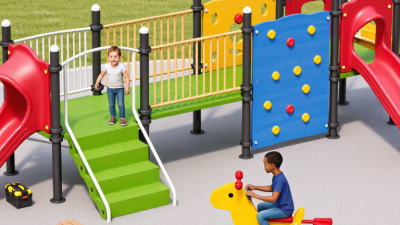
Age-appropriate design should guide every school playground decision. Younger children need low platforms, wide steps, gentle slides, and clear sightlines. Equipment should support balance, crawling, climbing, and imaginative play without excessive height. Small details matter. A five-year-old may need handrails that a taller student ignores.
Older students need more challenge, but not unnecessary risk. Schools can provide climbing walls, overhead equipment, agility routes, and multi-user movement zones. These facilities encourage strength, coordination, and social play.
The World Health Organization recommends at least 60 minutes of moderate-to-vigorous activity daily for children and adolescents. A varied playground can help schools create more active breaks. However, equipment alone cannot guarantee participation.
Safety planning must match each age group. The U.S. Consumer Product Safety Commission reports that falls cause about 79% of playground-related injuries. Its Public Playground Safety Handbook stresses protective surfacing, equipment spacing, and regular inspections. The Centers for Disease Control and Prevention estimates that more than 200,000 children receive emergency treatment for playground injuries annually in the United States.
Staff should check loose bolts, worn surfacing, sharp edges, and crowded routes before students arrive. I have found that smaller children often enter older students’ zones. That design weakness deserves attention. Separate areas help, but supervision and flexible scheduling remain essential.
The best school playground is not simply the largest or brightest. It should invite movement, curiosity, and conversation. Climbing frames build strength, balance, and planning skills. Slides offer controlled risk and support confidence. Low platforms and stepping paths help younger pupils practise coordination. These features turn ordinary breaks into active learning. Teachers can connect counting games, storytelling, and nature observation to the equipment. A simple path can become a map, a maze, or a measurement lesson.
Physical benefits become stronger when children can choose different challenge levels. Ramps, rails, and broad transfer spaces can support pupils with varied mobility needs. Shade, soft impact surfaces, clear sightlines, and regular inspections also matter. Safety is not only about preventing falls. It includes reducing crowding and making every child feel welcome. Social learning happens near shared equipment. Children negotiate turns, explain rules, and solve disagreements. Cooperative panels or group balance elements encourage communication without forcing every child into competition.
School teams should watch how equipment is actually used, not rely only on product descriptions. A quiet corner may be more valuable than another climbing feature. Staff can record waiting times, conflicts, and which pupils avoid certain areas. That evidence supports better layout decisions. No design is perfect; children often use equipment in unexpected ways. A balance beam may become a meeting place, while an expensive feature stays empty. Reviewing the space with pupils can reveal these gaps. Their comments may be messy, but they are useful.
| Facility Type | Best-Suited Age Group | Main Educational Benefits | Physical Benefits | Social and Emotional Benefits | Important Planning and Safety Features |
|---|---|---|---|---|---|
| Climbing Structures | 5–12 years, with age-appropriate sections | Builds problem-solving, spatial awareness, planning, and risk-assessment skills. | Develops upper-body strength, grip strength, balance, coordination, and agility. | Encourages turn-taking, peer support, confidence, and persistence. | Provide varied difficulty levels, fall zones, protective surfacing, handholds suitable for children, and clear visibility for supervision. |
| Swings | 2–5 years and 5–12 years using separate age-appropriate seats | Supports body awareness, rhythm, sequencing, and understanding of cause and effect. | Improves core stability, leg strength, balance, and vestibular development. | Promotes patience, sharing, communication, and self-regulation. | Separate toddler and school-age swing areas where possible; use appropriate seats, adequate spacing, impact-absorbing surfacing, and controlled access to swing paths. |
| Slides | 2–5 years and 5–12 years with different heights and designs | Reinforces sequencing, spatial judgment, decision-making, and following simple rules. | Supports climbing strength, balance, coordination, and controlled movement. | Creates opportunities for cooperation, turn-taking, and confidence-building. | Include stable access steps or ramps, guardrails, safe entry and exit zones, adequate fall protection, and materials that reduce heat exposure. |
| Balance and Agility Equipment | 5–12 years | Develops concentration, sequencing, motor planning, and flexible problem-solving. | Improves dynamic balance, coordination, lower-body strength, and body control. | Supports cooperative challenges, perseverance, and respectful peer interaction. | Offer multiple challenge levels, low-height options, rounded edges, stable anchoring, and fall surfacing appropriate to the equipment height. |
| Imaginative and Role-Play Areas | 2–12 years, with flexible layouts | Encourages language development, storytelling, creativity, planning, and symbolic thinking. | Provides moderate movement through walking, carrying, building, and active play. | Strengthens empathy, negotiation, cooperation, leadership, and conflict resolution. | Use open-ended elements, shaded seating, durable surfaces, visible boundaries, and enough space for small-group play. |
| Sand, Water, and Sensory Play | 2–8 years, with adaptations for older students | Supports early science concepts, measurement, texture awareness, cause and effect, and vocabulary development. | Develops fine-motor control, hand strength, coordination, and controlled movement. | Encourages shared exploration, communication, calm play, and inclusive participation. | Provide accessible work surfaces, drainage, safe water-management procedures, shade, hand-washing access, and materials that can be cleaned easily. |
| Inclusive Multi-Activity Areas | All school-age groups, with separated challenge zones | Combines movement, communication, sensory exploration, decision-making, and cooperative learning. | Provides varied opportunities for strength, balance, mobility, coordination, and active exercise. | Improves belonging, peer interaction, participation, confidence, and inclusion of children with different abilities. | Connect accessible routes to major play components; where applicable, maintain at least 915 mm (36 in) of clear route width, provide transfer or ramp access, use contrasting colors, and include quiet retreat areas. |
| Open-Ended Active Play Space | 5–12 years | Supports self-directed learning, strategy, creativity, spatial planning, and rule creation. | Promotes running, jumping, throwing, catching, cardiovascular activity, and gross-motor development. | Encourages teamwork, leadership, fair play, cooperation, and social problem-solving. | Use level, durable surfaces; define activity zones; separate fast-moving activities from quieter play; provide shade, storage, and clear supervision sightlines. |
Planning note: Equipment should be selected according to children’s ages, abilities, available space, supervision requirements, local accessibility rules, and applicable playground safety standards. Protective surfacing should be matched to each component’s critical fall height and maintained regularly.
What Type of Playground Facilities Are Best for Schools?
Planning, Maintenance, and Long-Term Facility Management
A suitable school playground begins with careful planning, not attractive equipment alone. Staff should study student ages, daily traffic, supervision points, shade, drainage, and emergency access. Separate active zones from quieter spaces to reduce collisions. Include accessible routes, transfer areas, and ground-level play features. Local safety standards should guide every decision. A qualified playground inspector can identify risks that busy staff may miss.
Maintenance must be practical and scheduled. Staff should check surfaces, fasteners, platforms, gates, and drainage before students arrive. Loose bolts, cracked surfacing, and standing water require prompt action. Keep inspection records with dates, photographs, and completed repairs. After storms or heavy frost, conduct an additional review. Small defects become expensive hazards when ignored. Cleaning also matters, especially around touchpoints and enclosed spaces.
Long-term management needs a realistic budget for repairs, replacement parts, resurfacing, and professional inspections. Choose durable materials that match the school’s climate and usage level. Train several employees, rather than relying on one knowledgeable person. That person may leave. A perfect maintenance plan is unrealistic. Schools should review incident reports, staff observations, and student feedback each term. Sometimes a popular feature creates supervision problems. Removing or relocating it may be wiser than preserving the original design. Regular reassessment keeps the facility useful, safe, and financially manageable.