| Definition |
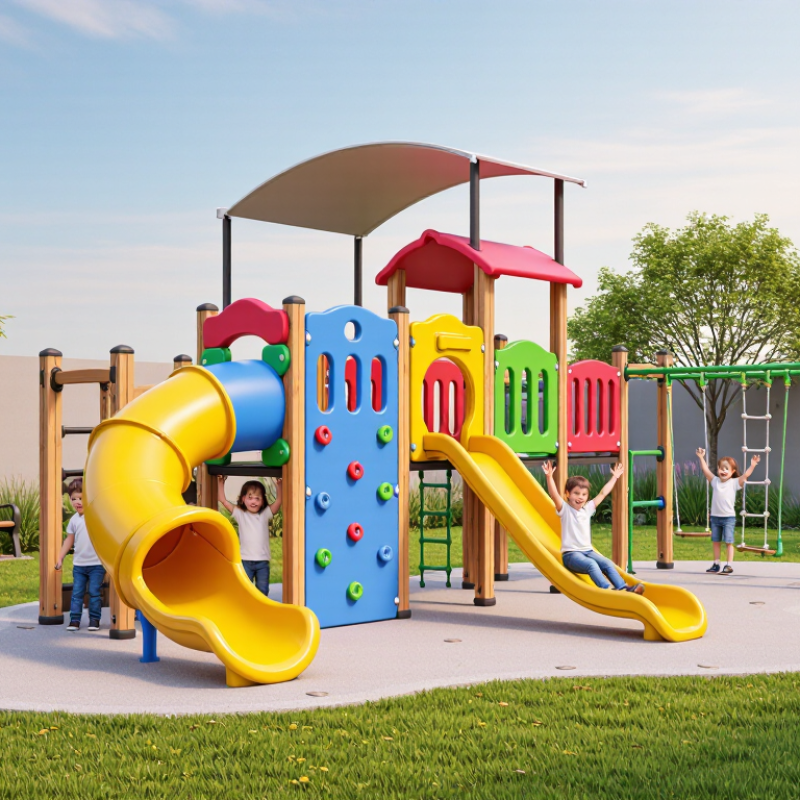
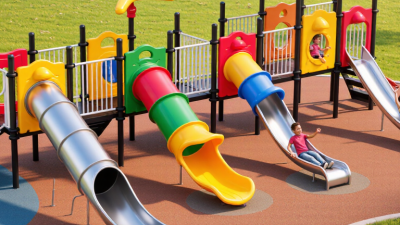
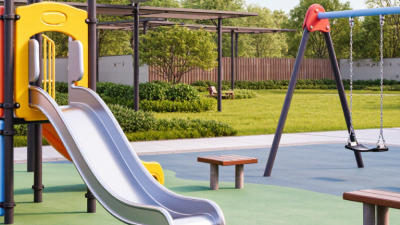
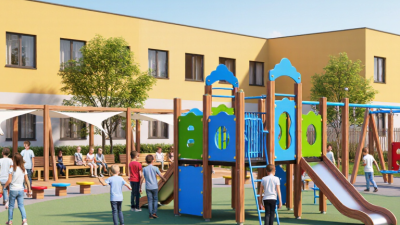
A slide outdoor playset is a children’s outdoor structure that commonly combines a platform, slide, climbing element, steps or ladder, and optional features such as a roof, swings, or a play panel. |
It creates a compact play area that supports active movement and imaginative play in one location. |
Confirm that every component is designed for outdoor use and is suitable for the intended age group. |
| Common Age Range |
Many residential playsets are designed for children approximately 2 to 12 years old, but the appropriate age range depends on the equipment design. |
Children of different ages have different balance, coordination, strength, and supervision needs. |
Follow the age guidance supplied with the specific playset rather than relying only on the child’s height or weight. |
| Slide Height |
Residential slide platforms commonly range from about 0.9 to 1.5 meters (3 to 5 feet) above the ground. |
A higher platform can provide more excitement, while a lower platform may be easier for younger children to access. |
Choose a height that matches the child’s developmental stage and provide appropriate protective surfacing below and around the equipment. |
| Slide Length |
Typical residential slides are approximately 1.8 to 3 meters (6 to 10 feet) long, although compact and extended designs also exist. |
Slide length influences the available installation space and the amount of run-out area needed at the exit. |
Measure the complete slide path and keep the exit area clear of fences, walls, trees, toys, and other obstacles. |
| Primary Materials |
Common materials include treated or naturally durable wood, powder-coated metal, molded plastic, and galvanized hardware. |
Material selection affects weather resistance, surface temperature, maintenance requirements, and overall service life. |
Look for smooth surfaces, rounded edges, corrosion-resistant fasteners, and materials approved for outdoor exposure. |
| Recommended Safety Zone |
A clear protective area is generally needed around play equipment. The U.S. Consumer Product Safety Commission commonly recommends at least 6 feet of protective surfacing around stationary play equipment, subject to equipment-specific guidance. |
A fall zone helps reduce the likelihood and severity of injuries caused by falls or running into nearby objects. |
Check local regulations and the playset instructions, and keep the safety zone free from hard surfaces and obstructions. |
| Protective Surfacing |
Common options include engineered wood fiber, rubber mulch, rubber tiles, synthetic turf with an impact layer, and other tested playground surfacing. |
Grass, soil, asphalt, and concrete do not provide equivalent impact protection for falls from play equipment. |
Use a depth and material appropriate for the equipment’s fall height, and maintain the surface to prevent worn or thin areas. |
| Physical Development Benefits |
Climbing, stepping, sliding, balancing, and gripping can engage gross-motor skills, coordination, body control, and spatial awareness. |
Active play supports movement practice and can help children build confidence through age-appropriate challenges. |
Select varied but manageable features and supervise children when they are learning to use the equipment. |
| Social and Imaginative Play |
Platforms, slides, play panels, and shaded areas can support turn-taking, cooperative games, storytelling, and role-play. |
Shared play encourages communication and helps children practice simple social skills. |
Choose a layout with enough room for safe movement and establish rules for waiting, climbing, and using the slide. |
| Space Requirements |
The required footprint includes the playset itself, the slide exit, access points, and the recommended protective surfacing area. |
A playset may fit physically in a yard but still be unsafe if there is not enough clearance around it. |
Measure the installation site before purchase and account for drainage, overhead branches, gates, fences, and utility lines. |
| Installation Requirements |
Assembly usually involves leveling the site, connecting structural parts, securing the frame, attaching the slide, and anchoring the equipment when required. |
Correct installation improves stability and helps prevent tipping, movement, loose connections, and premature wear. |
Install on a level surface, use all supplied hardware, tighten connections as instructed, and do not modify structural parts. |
| Maintenance Frequency |
Inspect the playset before each use and perform a more detailed inspection regularly, especially after severe weather or heavy use. |
Outdoor exposure can loosen fasteners, create splinters, cause corrosion, or reduce the depth of protective surfacing. |
Check bolts, anchors, platforms, handrails, steps, slide joints, ropes, moving parts, and surfacing condition. |
| Weather and Sun Exposure |
Sun, rain, snow, humidity, and temperature changes can affect wood, metal, plastic, fabric, and protective surfacing. |
Weather-related wear may create hot surfaces, fading, cracking, rust, or reduced structural performance. |
Provide shade where possible, allow wet surfaces to dry, remove standing water, and follow the material-specific care instructions. |
| Weight Capacity |
Weight limits vary by component and design; a playset may have separate limits for the slide, platform, swings, and climbing features. |
Exceeding a component’s limit can increase stress on joints and reduce stability. |
Use the manufacturer’s stated limits for each feature and never assume that one limit applies to the entire playset. |
| Safety Standards |
Quality playsets may be designed with reference to recognized playground safety guidance, such as ASTM F1487 in the United States or EN 1176 in Europe. |
Recognized safety guidance addresses issues such as entrapment, fall zones, structural integrity, openings, and impact protection. |
Check the applicable standards in your region and review the product’s safety documentation before installation. |
| Best Use Environment |
A level, well-drained outdoor area with sufficient clearance and visibility is generally the most suitable location. |
Good visibility supports supervision, while drainage helps reduce standing water and material deterioration. |
Avoid locations near pools, driveways, sharp landscaping, low branches, electrical hazards, or areas with poor drainage. |

 +86-13901441113