What Is Nursery Outdoor Play Equipment?
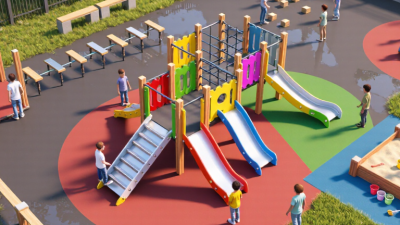
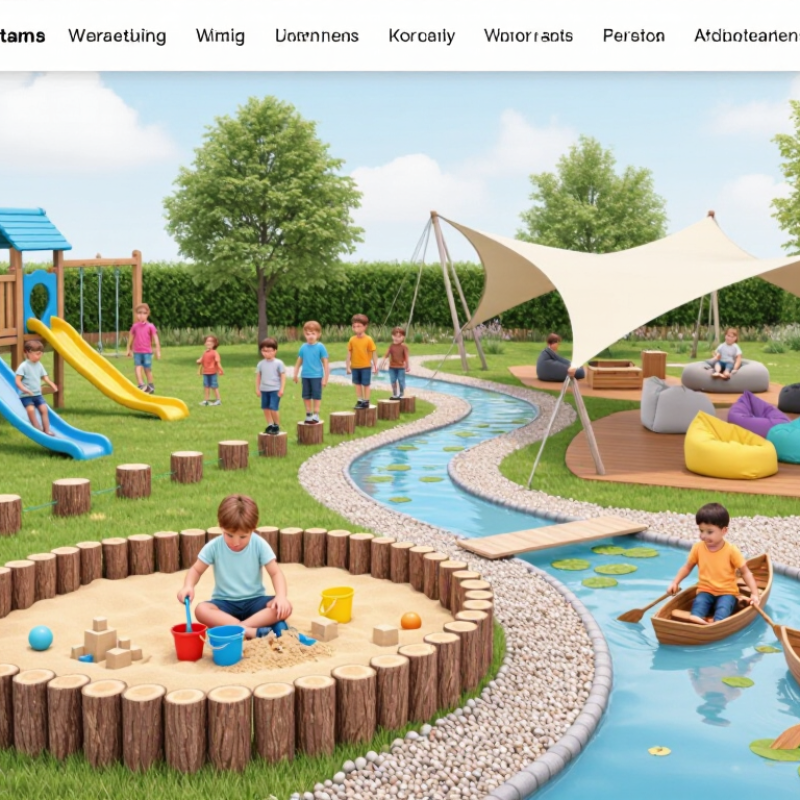
What Is Nursery Outdoor Play Equipment? It is the collection of outdoor structures, loose materials, and sensory features that help young children move, explore, and play. Nursery Outdoor Play might include a low climbing frame, a short slide, balance logs, sand, water channels, and shaded places to rest. The details matter. Equipment should suit children’s ages, abilities, and everyday routines, not simply fill a yard.
The World Health Organization’s 2019 Guidelines on Physical Activity, Sedentary Behaviour and Sleep for Children under 5 Years recommend at least 180 minutes of varied physical activity each day for children aged three to four. At least 60 minutes should be moderate-to-vigorous activity. These are daily activity recommendations, not equipment specifications. Still, they offer a useful benchmark: a setting should make active movement possible throughout the day. A slide alone cannot do that.
The American Academy of Pediatrics’ 2018 clinical report, The Power of Play, describes play as important to children’s physical, social, and emotional development. For nursery teams, this means looking beyond bright colors and impressive structures. Can a toddler reach the handrail? Can two children use the same feature without crowding? Is there room for quiet play, too? A well-equipped yard can still feel underused. That deserves attention, and regular observation may reveal why.
Definition and Scope of Nursery Outdoor Play Equipment
What Is Nursery Outdoor Play Equipment?
Definition and Scope of Nursery Outdoor Play Equipment
Nursery outdoor play equipment means purpose-designed outdoor items and spaces that support young children’s movement, exploration, and shared play. It can include low climbing frames, slides, balance beams, sand or water stations, ride-on toys, and loose natural materials. The scope also includes impact-absorbing surfaces, accessible routes, shade, and clear sightlines, because equipment works as part of a setting. Not just a slide.
Its purpose is broader than exercise. Children practise stepping, gripping, taking turns, and inventing stories among logs, buckets, and small platforms. WHO’s 2019 Guidelines on physical activity, sedentary behaviour and sleep for children under 5 years recommend at least 180 minutes of varied daily activity for children aged three to four, including 60 minutes of moderate-to-vigorous activity. This is a health benchmark, not a quota that equipment alone can deliver. The boundary can feel fuzzy. That matters.
Tips: Match equipment height and challenge to children’s ages and abilities. Check surfaces, fasteners, drainage, and sightlines routinely; a quick visual check catches some issues, not every hidden defect. Ask children what they actually use, then adjust the layout.
What Is Nursery Outdoor Play Equipment?
Nursery outdoor play equipment includes outdoor structures and play items intended to support young children’s movement, exploration and play. Examples include slides, swings, climbing frames and balance equipment. The appropriate equipment depends on children’s ages, abilities, space and safety requirements.
Daily Physical Activity Guidance for Early Years
WHO guidance recommends at least 180 minutes of physical activity per day for children aged 1–2 years and aged 3–4 years. For children aged 3–4, at least 60 minutes should be moderate-to-vigorous activity. Outdoor play equipment can provide opportunities for movement, but the guidance is for total daily activity—not equipment-use time.
Source: World Health Organization, Guidelines on Physical Activity, Sedentary Behaviour and Sleep for Children under 5 Years of Age.
Main Equipment Types: Climbing Frames, Slides, Swings, and Balance Features
What Is Nursery Outdoor Play Equipment?
Main Equipment Types: Climbing Frames, Slides, Swings, and Balance Features
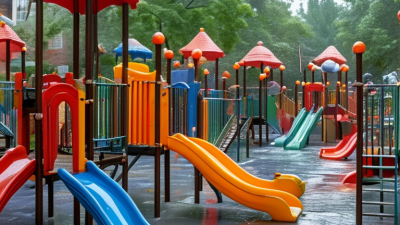
Nursery outdoor play equipment gives children space to practise movement, coordination, and confidence. Climbing frames can include low steps, sturdy handholds, and small platforms. Choose routes that let children climb up and return safely, without forcing them onto a difficult descent. Slides should suit the children’s size, with a clear landing area and enough room to queue. Simple details matter: wet steps can become slippery, and loose clothing may catch on equipment.
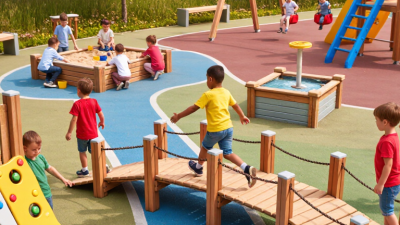
Swings support rhythm and balance. Select seats appropriate for the age group, and leave clear space around the swing path. Balance features might include low beams, stepping pods, or short, stable bridges. These invite children to slow down and judge each step. Keep the challenge manageable. It is easy to fill a yard with equipment, but crowded layouts can limit movement and imaginative play. The perfect layout is not always obvious; observe how children use the space and adjust where possible.
Tips: Check equipment regularly for loose fittings, splinters, sharp edges, and wear. Use impact-absorbing surfacing where falls are possible, and keep sightlines open for supervision. Follow the equipment maker’s age and installation guidance. Small adjustments can help. A clear path between play areas also reduces collisions and makes transitions easier.
Developmental Role: WHO Recommends 180 Activity Minutes Daily for Ages 3–4
For children aged 3–4, outdoor play can make daily movement feel like an adventure. A child might step over a log, push a ride-on toy, or chase bubbles across the yard. WHO’s 2019 Guidelines on Physical Activity, Sedentary Behaviour and Sleep recommend at least 180 minutes of physical activity each day, at any intensity. At least 60 minutes should be moderate to vigorous, such as energetic running or active climbing. The total can be spread throughout the day; it does not need to happen in one long session.
Tips: Offer a mix of active choices: low steps, a balance beam, open space, and balls. Let children choose and repeat activities. Repetition can build confidence, even when the game looks simple.
Outdoor equipment can invite movement, but it cannot guarantee it. Children differ in confidence, mobility, and interest, so watch how they use the space and adjust activities. A quiet day will happen. The WHO target is useful guidance, not a scorecard for every child or nursery. A few minutes spent waiting for a turn may also mean less active time than planned.
Impact Safety: ASTM F1292 Sets Limits of 200 g and HIC 1,000
Nursery outdoor play equipment can invite climbing, running, and jumping, so the surface beneath it matters. ASTM F1292 evaluates how playground surfacing absorbs impact. Its commonly cited limits are a peak deceleration of 200 g and a Head Injury Criterion (HIC) of 1,000 or less. The g value measures the force of a sudden stop; HIC accounts for both the level and duration of head acceleration. These are performance limits, not guarantees against injury.
Testing relates to the surfacing, installation, and specified fall height—not to a promise that every fall will be harmless. A soft-looking surface may still perform poorly if it is thin, compacted, displaced, or installed over a hard base. Check areas beneath platforms and at slide exits, where children land repeatedly. Look for bare patches, worn seams, and loose material pushed aside by small feet. Small details matter.
Records from appropriate impact testing can help assess whether a surface meets the relevant criteria. But a report reflects tested conditions at a particular time. Regular inspection and maintenance still matter, and they are easy to underestimate. A tidy surface can conceal a firm spot.
Choosing and Maintaining Equipment: Age Fit, Surfacing, Space, and Inspections
Nursery outdoor play equipment should match children’s size, confidence, and abilities, not just the age listed in a catalogue. Low steps, reachable handholds, and short slides let younger children practise balance without being lifted. Older preschoolers may enjoy climbing frames, but clear routes and manageable heights still matter. Children develop unevenly. That is easy to forget.
Choose surfacing to suit the equipment’s fall height, and keep it continuous around likely landing areas. Check for exposed hard ground, loose material displaced from under swings, and puddles that linger after rain. A soft surface is not automatically safe if it is compacted, thin, or poorly drained. Space needs more than a measured footprint. Leave room for children to queue and move between play zones. Keep walking routes away from swing paths.
Staff can make quick visual checks each day, then record more detailed inspections at planned intervals. Look for loose bolts, splinters, sharp edges, worn ropes, and shifting anchors. Check drainage too; small changes after heavy rain can create new hazards. Follow the equipment’s care instructions and arrange repairs when defects appear. A note in the log is useful, but it does not fix a wobbly handrail. Review whether children actually use the space as intended, since a layout that looks clear on paper may feel crowded during busy play.
 +86-13901441113

 CONTACT NUMBER
 CONTACT NUMBER